Spoon Theory: A Complete Guide For Spoonies And Allies

Why Millions Of People Are Obsessed With Counting Spoons

Picture this: you wake up and immediately know it’s going to be a low-energy day.

Your energy tank isn’t just low, it’s running on fumes before you’ve even gotten out of bed. Every chronic illness warrior knows this feeling, the instant calculation that happens between consciousness and that first reluctant movement.

Should you shower today or save that energy for work? Can you handle grocery shopping AND cooking dinner, or is that asking too much of a body that’s already waving the white flag?

For decades, people with chronic illness have been making these strategic decisions every single day. We’ve been energy economists out of necessity, rationing our resources. But we didn’t have language for it.

We couldn’t explain to healthy people why we looked fine yesterday but can barely function today. Why that fun night out last week is still sending us recovery bills. Why we have to choose between being social and being productive.

Then came 12 spoons in a diner, and everything changed.

Suddenly, millions of people had a way to explain the unexplainable. The invisible became visible. The chronic illness community finally had a metaphor that made sense.

This is the story of how Spoon Theory became a revolution.

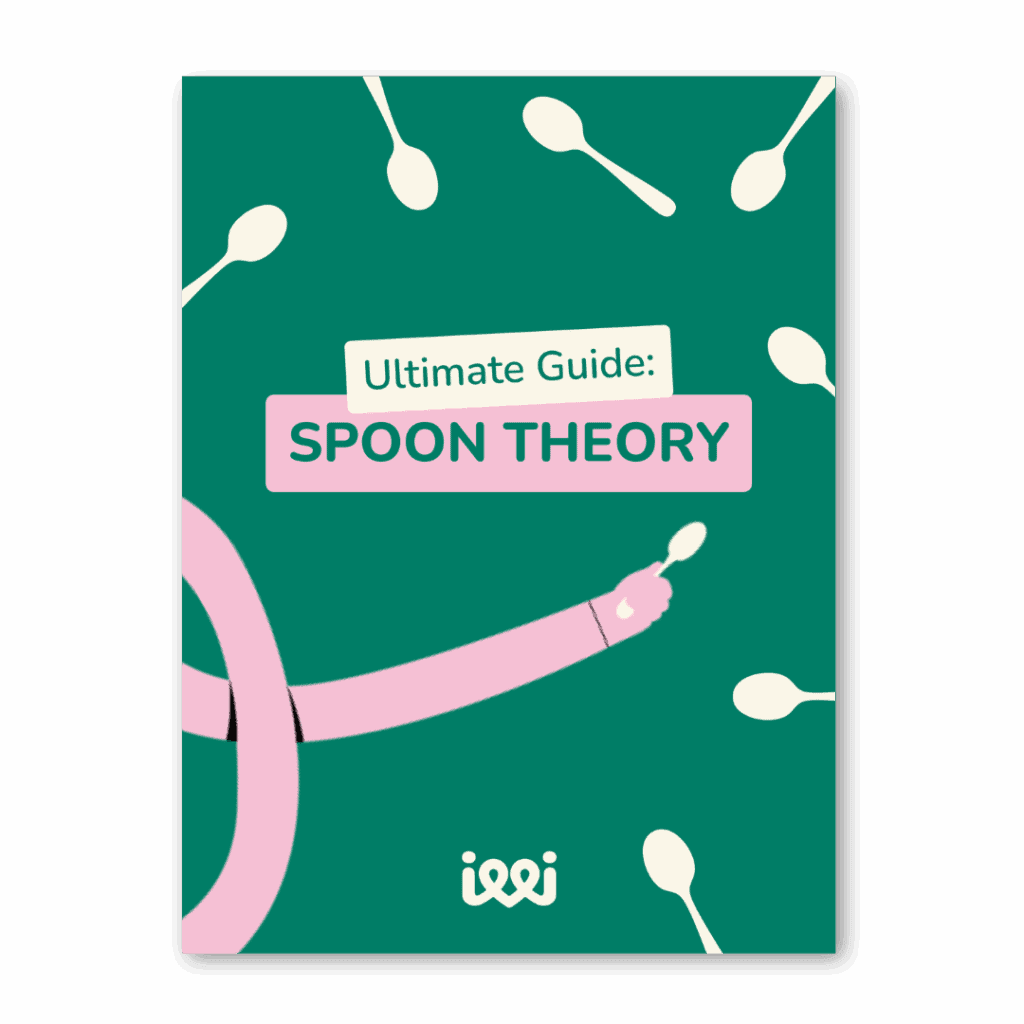
Spoon theory guide cover with illustration of spoons on green background, pink and white text, and a pink arm holding a spoon.

FREE Spoon Theory Guide

Spoon theory is a real tool used by millions of spoonies just like you. This freebie includes: 

  • 7-day spoon audit & reflection exercise
  • Emergency protocol planner for crisis days
  • Spoon optimisation strategies
  • Printable weekly spoonie tracker template
Why Spoon Theory Matters So Much

Why Spoon Theory Matters So Much

Trying to explain all of this to healthy people was exhausting. On the outside we might look fine, yet the next day we can barely function. That fun night out last week can still be sending recovery bills days later. Often we are forced to choose between being social and being productive, and that trade off is hard to explain without a shared metaphor.

Then came twelve spoons in a diner, and everything changed.

Suddenly, millions of people had a way to explain the unexplainable. The invisible became visible. The chronic illness community finally had a metaphor that made sense. That metaphor is called spoon theory, and it has become a lifeline for people with chronic illness and for many people living with long term mental health conditions.

If you want to see how we use spoon theory in real life pacing, you can also read our guide on post exertional malaise and pacing.

Where Did Spoon Theory Originate And Who Created It?

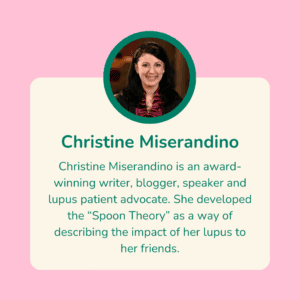
Christine Miserandino creator of spoon theory

Spoon theory did not start in a research lab. It started in a diner in 2003, with a simple question from a friend.

Christine Miserandino was having lunch with her best friend when the question came up. “What is it like to have lupus?” She had been asked this before and had tried explaining the fatigue, the unpredictability, the way her body could betray her without warning. Even with all that effort, her friend never really got it.

This time felt different.

Christine looked around the diner, grabbed a handful of spoons from nearby tables, and counted out twelve. “You have lupus,” she told her friend, handing over the spoons. Then she walked her through a typical day, taking away spoons for each activity. Shower. That is one spoon. Getting dressed. Another spoon. Making breakfast. More spoons gone.

By lunchtime, her friend clutched her remaining spoons like precious currency and finally understood the weight of every decision. “I do not have enough spoons for the rest of the day,” her friend whispered. Christine smiled and said, “Now you get it.”

How one story about spoons went viral

Christine later shared this story in an essay on her website butyoudontlooksick.com. The piece spread through chronic illness communities and later appeared in teaching resources and medical discussions, including an ACS teaching resource that describes spoon theory as a way to understand reduced energy in disability and chronic illness.

From there, spoon theory moved into lupus groups, chronic illness forums, and social media communities. Lupus and chronic illness communities still share versions of this story to explain energy limits in simple terms.

Major organisations, including the Cleveland Clinic, now describe spoon theory as a metaphor that helps people understand how chronic illness affects daily energy. The term “spoonie” was born, and millions of people finally had an identity, a community, and a way to make the invisible visible.

The original spoon theory story used twelve spoons in a diner to explain life with lupus.

What Is Spoon Theory In Simple Terms?

Spoon theory definition and explanation for chronic illness

So, what is spoon theory in simple terms.

Spoon theory uses spoons as a unit of energy. Each activity in a day “costs” a certain number of spoons. People with chronic illness or disability often start the day with fewer spoons than non disabled people and lose them faster.

As lupus and chronic illness communities explain it, you might start the day with ten spoons on a good day, six spoons on an average day, or two spoons on a flare day. Every task, from showering to answering emails, takes one or more spoons. When you run out, you are done. There is no magical refill button.

People living with long term mental health conditions also use spoon theory to explain emotional and cognitive fatigue. It is not just about physical tiredness. It is about the total energy it takes to move through the world.

How Does Spoon Theory Work Day To Day?

Everyday tasks like getting out of bed, showering, commuting, working, socialising, and cooking all “cost” spoons. Chronic illness communities often describe this as energy budgeting. You only have so many spoons, so you have to choose where to spend them.

When someone runs out of spoons, they may experience crashes, flare ups, or shutdowns and need recovery time. For many spoonies, this can look like lying in a dark room, cancelling plans, or needing several days of quiet to get back to baseline.

In practice, spoon theory looks like this. You wake up, check in with your body, and decide how many spoons you realistically have. Then you plan your day around that number, not around what you wish you could do.

If you enjoy practical tools, you will probably like our future “Ultimate Guide: Spoon Theory” resource, which will build on this spoon theory guide and help you map your spoons across the week.

Spoon theory started with lupus, but it did not stay there. Chronic illness communities use spoon theory to describe life with conditions like lupus, chronic pain, migraine, POTS, and MS. For example, the Lupus Foundation of America explains how lupus can cause severe fatigue and pain. The National MS Society describes fatigue and mobility issues in MS. The American Migraine Foundation talks about migraine as a neurological disease with sensory sensitivity and exhaustion. All of these experiences fit naturally into the spoon theory metaphor.

People with POTS, described by Dysautonomia International, often talk about how standing, showering, or walking can cause dizziness, rapid heartbeat, and intense fatigue. For them, even basic upright activities can burn through spoons quickly.

Spoon theory also applies to mental health. Many people use it to describe the energy cost of depression, anxiety, PTSD, and other conditions. Mental health discussions of spoon theory point out that tasks like showering, answering messages, or leaving the house can cost far more spoons when someone is depressed or anxious.
In short, spoon theory is used by people with chronic physical illness, chronic pain, and long term mental health conditions. If your energy is limited and unpredictable, spoon theory probably applies to you.

How To Calculate Your Way To Better Days With Spoon Theory

Spoon theory is not just a cute metaphor. It is a practical strategy that chronic illness spoonies use to measure and manage their days. Every spoonie becomes an energy accountant by necessity.

The secret is not having more spoons. It is becoming incredibly strategic about the ones you have.

The Spoon Audit Method

Before you can manage your spoons, you need to know where they are actually going. A simple spoon theory audit can help.

Morning spoon check. When you wake up, rate your energy from one to twelve spoons. Note what influenced this number. Sleep quality, pain levels, stress, weather, hormones, and medication timing can all change your spoon count.

Activity logging. During the day, record the spoon cost of your activities. Do not just track the big ones. Social, mental, and emotional demands can drain spoons as much as physical tasks. Because of this, it helps to pay attention to “energy leeches,” people or situations that leave you feeling wiped out without a clear reason.

Evening review. At night, compare how many spoons you thought you had with how many you actually used. Then notice where the spoon leaks happened. Which activities cost more than you expected.

Weekly spoon patterns. After a few weeks, look for patterns. Which days are your naturally higher spoon days. Which days are consistently low. As a result, you can start to plan your week. Schedule demanding tasks on higher energy days and protect low spoon days for rest and recovery.

Michelle says, “These patterns will not always be the same because your health is unpredictable, but this gives you a base to start with. I find Mondays the hardest because I do house cleaning, social activities, and shopping on Saturdays, crash on Sundays mostly resting, but still feel the hangover on Mondays. Add a social activity on Sunday. That tired hangover extends even longer.”

If this sounds like a lot, you are not alone. That is why we are building tools like a personal spoon tracker to make this process less overwhelming and more playful.

Your Daily Spoon Allocation

Here is the fundamental difference. Healthy people often feel like they have unlimited spoons that refill throughout the day. People with chronic illness or long term mental health conditions get a maximum of eight to twelve spoons, and that number changes daily based on factors outside their control.

The Spoon Cost Breakdown

Every activity has a price tag, and these costs can vary dramatically depending on your current state. The same activity can cost different amounts on different days. That shower that costs one spoon on a good day might cost three spoons during a flare and leave you needing a nap. This unpredictability is part of what makes chronic illness so hard to manage.

Spoon Theory Do’s And Do Not’s

Do:

  • Check your spoon count each morning.
  • Plan around actual capacity, not wishful thinking.
  • Save spoons for what matters most to you.
  • Build buffer spoons into your day.
  • Accept that some days you will have fewer spoons.

Do not:

  • Fall into the overdraft trap, “I will just push through today.”
  • Ignore your body’s spoon signals.
  • Compare your spoon count to others.
  • Feel guilty about low spoon days.

Here is what many healthy people do not understand. You cannot borrow spoons from tomorrow. When you overdraw from your spoon limit, your body sends you an invoice with brutal interest rates.

Medical research on conditions like ME and chronic fatigue syndrome describes this as post exertional malaise. Symptoms worsen twelve to forty eight hours after activity, and recovery can take days or weeks. NHS guidance on chronic fatigue and pacing talks about this delayed crash and the importance of managing energy carefully.

Spoon theory transforms “I am too tired” into “I have calculated my energy budget and this activity exceeds my available resources.” Suddenly, you are not lazy or dramatic. You are a careful financial planner working with a limited budget.

The Spoonie Scoop

Spoonie Scoop Pink
Twenty plus years in, most days I am working with five spoons or less. I still overdraft on good days because letting go of ‘normal’ is harder than it sounds. I used to panic about losing friends who could not handle my limitations. The right people do not just tolerate your spoon management. They help you protect it. Real friends do not guilt trip you for choosing your health.
AMANDA (Co - Founder)
I thought chronic illness was like the flu. You rest up and bounce back. Wrong. I spent years fighting my spoonie energy, desperately trying to hold onto my old life where I could work, study, work out, and go out in one day. The wake up call came when I realised I was making myself sicker by refusing to accept my new reality. Everything changed when I stopped fighting my spoons and started working with them. It turns out, energy friendly hobbies are actually more fun.” What helps is planning my most mentally demanding tasks for my clearest time of day and giving myself permission to stop when the fog rolls in. I used to push through and then crash. Now I try to stop earlier, even if that means some things wait until tomorrow.
MICHELLE (Co - Founder)

Spoons Not Your Thing? Try These 

Alternative metaphors to spoon theory for chronic illness

Look, we get it. Not everyone vibes with spoons.

Maybe the cutlery metaphor feels too cutesy for your chronic illness reality. Or maybe you have tried spoon theory and it just does not click with how your brain works. That is completely okay.

The chronic illness community is creative, and we have developed plenty of other ways to explain our energy limitations.

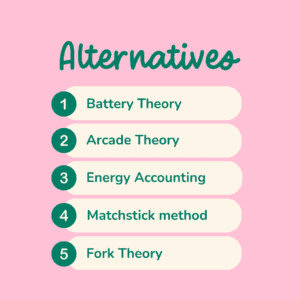
Battery theory

Your body is a phone battery. You start each day with a certain percentage, and every activity drains you. Unlike a phone, you cannot just plug in for a quick charge. Some days you wake up at one hundred percent, other days you are already at thirty percent. The goal is to make your battery last all day without completely dying.

Arcade theory

Best for: Tech savvy people who understand device limitations.

You start each day with a handful of tokens. Every activity costs tokens. Some cost one, others cost five. Once you are out of tokens, the game is over. You cannot earn more tokens during the day, so you have to choose your games wisely.

Best for: People who like gaming metaphors and clear transactional thinking.

Energy accounting

Forget metaphors entirely. You can track your energy like a bank account. You have deposits, rest, good sleep, low stress activities, and withdrawals, work, social events, medical appointments. The goal is to avoid overdrafting your energy account.

Best for: People who prefer straightforward, business like approaches.

Each day you have a box of matches. Every task burns one or more matches. Some activities are quick burns, others are slow burns that consume multiple matches. Once your matchbox is empty, you are done for the day.

The matchstick method 

Each day you have a box of matches. Every task burns one or more matches. Some activities are quick burns, others are slow burns that consume multiple matches. Once your matchbox is empty, you are done for the day.

This method can feel especially helpful if you like visual reminders. You might picture a small row of matches on your bedside table in the morning. As the day goes on, you mentally “light” a match for each thing you do. Getting dressed might burn one match. A medical appointment could burn three. A big social event might use up the rest of the box.

The matchstick method also makes it easier to explain your limits to other people. Instead of saying “I am too tired,” you can say, “I am out of matches for today, I need to save tomorrow’s matches so I can get to my appointment.”

Best for: Visual learners who like the imagery of finite resources and clear start and end points.

Fork theory

Fork theory is a twist on spoon theory that focuses on mental health. You have a limited number of forks each day for dealing with difficult, uncomfortable, or mentally challenging tasks. Unlike spoons, forks are specifically for the hard stuff. The conversations you do not want to have, the emails that stress you out, the decisions that drain you.

Best for: People whose chronic illness heavily impacts mental and emotional energy.

The beauty of these alternatives is that they all acknowledge the same fundamental truth. Your energy is limited, valuable, and worth protecting.

Pick the metaphor that speaks to you. Or create your own. The important thing is not the utensil or device you choose. It is having language for your experience.

The Energy Management Secret That Doctors Do Not Tell You

Here is what no one tells you about spoon theory. It is not just about counting spoons. The real power comes from using spoon theory as an energy management system that actually fits your life.

The secret is not having more spoons. It is becoming incredibly strategic about the ones you have.

Michelle’s Pro Tips

Habit stacking

“Habit stacking changed everything for me. Instead of treating each task as a separate spoon expense, I learned to bundle activities together. You get more value for your energy investment.”

Examples:

  • Slow cooker meals and one pan dinners that cook while you rest.
  • Powder vitamin and mineral supplements mixed into your morning protein smoothie.
  • Lymphatic draining with a loofah in the shower and a lymphatic face massage when you apply moisturiser.
  • Listening to audiobooks or podcasts while doing gentle stretches.
  • Breathing exercises during TV shows or while you sit in a warm bath.

High ROI spoon investments

Smart spoonies invest their spoons in activities that cost energy now but save spoons later.

Examples:

  • Meal prep on good days and batch cooking freezer meals.
  • Automating bills, subscriptions, and recurring orders.
  • Planning an “errand day” so appointments are grouped and you minimise driving and getting dressed multiple times.
  • Using online grocery delivery instead of in store shopping when you can.
  • Setting up medication organisers for the entire week.
  • Creating a capsule wardrobe to reduce daily outfit decisions.

Emergency spoon protocol 

When you are running dangerously low on spoons and everything feels overwhelming, it is time to shift into survival mode and protect what little energy you have left. Your only job right now is damage control and recovery.

Your emergency protocol might include:

  • Delegate to a partner, family member, or friend if possible.
  • Communicate your limits clearly to everyone who needs to know.
  • Cancel non essentials without guilt.
  • Lower standards temporarily. Done is better than perfect.
  • Activate your pre made meal stash or simplest food options.
  • Focus on rest and gentle self care that actually helps you recover.

Real Talk

Let us be honest about something. Spoon theory is powerful, but it is not magic.

Spoon theory will not cure your chronic illness. It also will not magically hand you more energy. It definitely will not stop well meaning people from saying “but you look fine” when you are running on fumes.

Some days, even perfect spoon management feels impossible. You wake up already in debt, every task feels impossible, and the idea of counting spoons makes you want to throw the whole cutlery drawer out the window.

There are a few hard truths to keep in mind.

  • Unpredictable flare days: Sometimes your body throws the entire spoon budget out the window. You planned for eight spoons, but you wake up with two.
  • Mental health struggles: Depression and anxiety do not always follow spoon logic. A physically good day can still feel like a low spoon day when your mental energy is drained.
  • Guilt and pressure: Spoon theory can become another thing to “fail” at. If you overspend your spoons, you might beat yourself up for “not managing properly.”
  • Others do not get it: Not everyone will understand or respect your spoon limitations. Some people will still push, guilt trip, or dismiss your energy management.
  • The comparison trap: Your five spoon day might look very different from another spoonie’s five spoon day. Chronic illnesses vary wildly, and so do spoon allocations.

It is important to remember that spoon theory is a tool, not a rule. It is meant to help you understand and communicate your limits, not create new ways to judge yourself.

Some days you will nail your spoon budget. Other days you will completely ignore it and deal with the consequences. Both are okay. The goal is not perfection. The goal is to live as kindly as possible with the body and brain you have.

Your spoons, your rules.

Your Energy, Your Rules

Here is what we want you to remember from all of this.

Whether you count spoons, track battery percentages, or budget energy like a financial planner, the method is not what matters most. What matters is that you finally have permission to acknowledge your limits.

For too long, chronic illness warriors have been expected to operate like healthy people while managing bodies that do not cooperate. We have been told to “push through” real physical and mental limitations.

Spoon theory says enough.

Remember that your energy is finite and your limits are real. Needing to pace yourself is not weakness. It is self care and self respect.

Over time, we start saying no without guilt. We begin planning our days around our actual capacity instead of our wishful thinking. That shift helps us treat our energy like the precious resource it is.

Most importantly, we start believing that our lives, even with limitations, still have value and meaning.

Spoons, energy, and limits all belong to you. You choose how to spend your spoons, how to protect your energy, and where to draw the line.
The Spoon Theory is a way to explain what it’s like to live with limited energy due to chronic illness or disability. Each spoon stands for a unit of energy. When you run out of spoons, you can’t do any more that day.
 
Read the original essay by Christine Miserandino here.
Christine Miserandino created the Spoon Theory. She wrote about it in her essay “The Spoon Theory” after using spoons at a diner to explain her experience with lupus.
No, the Spoon Theory is used by people with all kinds of invisible illnesses, disabilities, chronic pain, mental health conditions, and neurodivergence. Anyone who deals with limited energy or unpredictable stamina can use it.
Yes! Some people prefer the Battery Theory, Points System, or Gas Tank Metaphor. Use whatever metaphor helps you communicate your needs best.
Share Christine’s original essay, use spoons as a visual, or describe how every activity costs energy. Remind people that you can’t always predict what will use up your spoons

Related Articles