Post Exertional Malaise: Symptoms, Causes, And How To Manage It

Post Exertional Malaise (PEM): Why One “Big Day” Can Wipe You Out For Weeks

Post exertional malaise is that crash that hits hours, or even a day, after you do something that looks tiny from the outside.

You know that rare day when you finally have a tiny bit of energy. You try to live like a “normal” human for five minutes, and your body responds by pulling the fire alarm.

The bone deep fatigue, the pain, the brain fog so thick you forget your own postcode, is not you being “dramatic” or “unfit.” It has a name: Post Exertional Malaise (PEM).

PEM is one of the most misunderstood parts of chronic illness. Friends, doctors, even well meaning physios might tell you to “just exercise more.” Meanwhile your body is quietly screaming, “Actually, this is making me worse.”

Because of that, this guide is here to change the story.

We will walk through what post exertional malaise is, how it shows up, why it happens, as far as science currently knows, who gets it, how long PEM can last, and what you can realistically do to avoid or recover from post exertional malaise as much as possible.

No toxic positivity. No “just push through.” Instead, you get evidence based info, lived experience, and practical pacing tools for spoonies trying to survive PEM without losing their mind.

What is Post Exertional Malaise (PEM)?

What is Post-Exertional Malaise (PEM)?
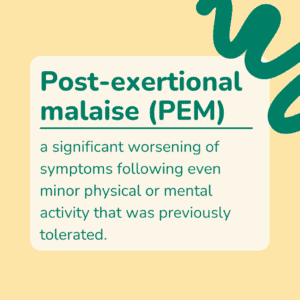
Post-exertional-malaise definition and explanation for chronic illness

Post exertional malaise (PEM) is a worsening of symptoms after physical, mental, or emotional exertion that would not have caused a problem before you became ill.

Medical bodies like the CDC’s ME/CFS overview describe PEM as a core symptom of ME/CFS. Even small activities can trigger a flare of fatigue, pain, sleep problems, and cognitive issues that can last days, weeks, or longer. It is also widely reported in Long Covid, POTS, and other chronic conditions.

In simple terms, your body spends energy like a broken credit card. A tiny transaction can send you into overdraft.

Post exertional malaise is different from:

  • General tiredness or “malaise symptoms” after a busy day
  • DOMS, Delayed Onset Muscle Soreness, after a workout
  • Feeling “a bit off” after poor sleep

With post exertional malaise, the crash is completely out of proportion to what you did. For example, you might:

  • Shower and wash your hair
  • Have a short conversation
  • Answer a few emails
  • Walk to the letterbox

Then 12 to 48 hours later, you are hit with PEM fatigue, pain, flu like symptoms, or a full body shutdown that feels like your system has been unplugged.

PEM, POTS, Long Covid, and DOMS, related but not the same
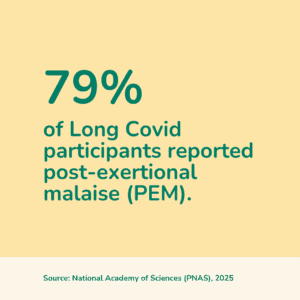
Post-exertional malaise statistics in chronic fatigue patients

Post exertional malaise often shows up alongside other conditions. As a result, it can be confused with different types of “malaise symptoms.”

Many people with POTS and chronic fatigue syndromes experience post exertional malaise POTS style crashes after standing, walking, or even showering. This might be labelled as post exertional malaise fatigue syndrome in some medical notes. However, the lived experience is the same: activity now, crash later.

A big point of confusion is post exertional malaise vs DOMS:

  • DOMS is muscle soreness after a workout. It usually peaks 24 to 72 hours after exercise and often improves with gentle movement.
  • PEM is a whole body symptom flare. It includes fatigue, pain, cognitive issues, and flu like feelings, and it is often triggered by much smaller activity. Movement can make it worse.

Articles like Healthline’s overview of PEM and patient organizations highlight this difference. Their goal is to help clinicians recognize PEM instead of assuming someone is just “deconditioned.”

In Long Covid, many people report “malaise Covid” symptoms that match post exertional malaise. They describe delayed crashes after activity, worsening fatigue, and cognitive problems. Because of this, groups like Long Covid Europe are pushing for better recognition of PEM in post viral conditions, not only in ME/CFS.

Symptoms and triggers of post exertional malaise
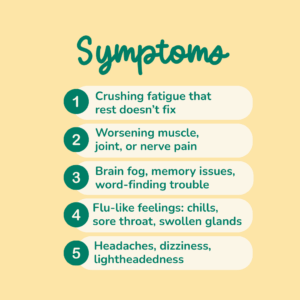
Post-exertional malaise symptoms checklist for spoonies

PEM does not look the same for everyone. Even so, common post exertional malaise symptoms include:

  • Crushing fatigue that rest does not fully fix
  • Worsening pain, muscle, joint, or nerve
  • Brain fog, memory issues, trouble finding words
  • Flu like feelings, chills, sore throat, swollen glands
  • Headaches, dizziness, lightheadedness
  • Sleep problems, insomnia or unrefreshing sleep
  • Sensory overload, light, sound, or smell sensitivity

These symptoms are described across sources like the Solve ME/CFS Initiative, the CDC, and the ME Association’s PEM guide.

Common PEM triggers include:

  • Physical activity, walking, housework, showering, exercise
  • Cognitive load, work tasks, studying, reading, screen time
  • Emotional stress, conflict, anxiety spikes, big life events
  • Sensory load, noisy environments, bright lights, crowded spaces

For some people with POTS, MCAS, or Long Covid, even standing upright too long can be enough to trigger post exertional malaise.

In addition, clinical reviews of PEM, for example on Physio Pedia and in articles on Healthline, point out that there is no single proven treatment yet. Instead, pacing, symptom management, and careful choices about activity are still the main tools people have. Evidence is limited, and what helps one person may do nothing, or make things worse, for another. This is why many spoonies focus on learning their patterns and protecting their spoons as much as possible.

Why does post exertional malaise happen?

Science is still catching up. Even so, several theories are being explored by researchers and organizations like the NIH and the Solve ME/CFS Initiative:

  • Immune dysfunction. The immune system may stay switched “on,” which can cause inflammation and flu like malaise symptoms after exertion.
  • Abnormal energy metabolism. Cells may struggle to produce and use energy properly, so activity drains the system faster than it can recover.
  • Autonomic nervous system issues. Problems with heart rate, blood pressure, and circulation, often seen in POTS, can make even small efforts feel like running a marathon.
  • Post viral and Long Covid mechanisms. For many, PEM started after an infection, including Covid, and overlaps with “malaise Covid” experiences described by groups like Long Covid Europe.

None of these theories fully explain PEM yet. However, they all point to one important truth.

Post exertional malaise is physiological, not a character flaw.

If you have ever been told it is “just anxiety” or “just deconditioning,” you are not imagining how wrong that felt.

The Spoonie Scoop 

Personal experiences with post-exertional malaise from spoonies

For me, a 'good day' is like winning the lotto. Most of my days now are bed bound and in pain, so when a little bit of energy shows up, it feels precious and rare. However, I know that if I use it, I will almost definitely pay for it with two or three days of being wiped out. Sometimes you just have to live in those moments. On those days I will try to catch up on housework, errands, or family life, and yes, I will overdo it. I go into it knowing a crash is coming. When good days are this unpredictable, you grab them with both hands and ask for forgiveness later, because you never know when the next one will come.
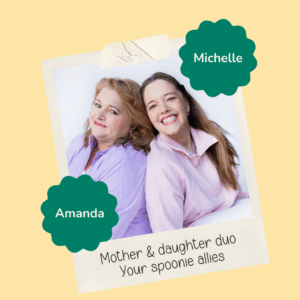
AMANDA (Co - Founder)
PEM often shows up after 'productive Saturdays.' Because I work a 9 to 5 and build Alivio before and after work, there is almost no time during the week for errands. As a result, I try to pack everything into one day: cleaning, washing, shopping, meal prep, all in one go, so I do not have to get dressed and drive multiple times. That kind of day usually means a Sunday crash, couch bound for most of the day. At least this way my life feels a little more balanced. I rest whenever I can, but I also still have to live my life. Now I plan around it. For example, no social activities on Sundays, a lighter workload on Mondays, and no gym on Mondays after a big Saturday. In other words, it is all about working with my body so I do not miss out on living completely.
MICHELLE (Co - Founder)

How to live with post exertional malaise without losing your mind 

Learn your baseline and spoons

First, start by tracking your symptoms for a few weeks. Note what you did the day before a crash. Look for patterns, walking distance, screen time, conversations, appointments, and how many spoons each thing seems to cost you.

This is the foundation of pacing and spoon management. Groups like ME Action’s pacing resources and the ME Association recommend this kind of tracking.

Pacing, the unsexy superpower 

Pacing is about staying within your spoons so you do not constantly trigger PEM.

Practical pacing strategies include:

  • Break tasks into smaller chunks with built in rest.
  • Use timers for activity and rest, for example 10 minutes on, 20 minutes off.
  • Alternate physical, cognitive, and emotional tasks.
  • Schedule recovery days after anything big, like appointments or social events.

Pre emptive rest

Next, do not wait until you feel awful. Rest before you crash.

  • Plan lie down breaks even on “good” days.
  • Use sensory friendly rest, low light, minimal noise, comfy position.
  • Treat rest as a non negotiable medical tool, not a luxury.

How to recover from post exertional malaise

When PEM hits, you can shift into recovery mode:

  • Drop your activity level below your usual baseline.
  • Prioritize essentials only, meds, food, hydration, bathroom.
  • Use tools that help you rest, eye masks, earplugs, heat packs, cooling pads, fidgets, coloring pages, or gentle audio.
  • Ask for help if you can for meals, chores, or childcare.

Recovery time varies. Patient reports collected by sites like Health Rising suggest post exertional malaise can last hours, days, or weeks depending on the trigger and severity.

Real Talk

Living with post-exertional malaise reality for chronic illness

Post exertional malaise forces you to make choices that most people never have to think about. Spend your spoons on a shower, a medical appointment, or a rare fun outing, and you might be trading that for a full day, or several days, of being wiped out.

You can track your spoons, pace carefully, and build in rest. Even then, PEM can still hit after something small, like a slightly longer conversation or a surprise errand. That unpredictability is one of the hardest parts of post exertional malaise.

Sometimes you will choose to spend all your spoons on purpose, a birthday, a visit with someone you love, a once in a year event, knowing a crash is coming. At other times you will cancel plans, leave messages unread, or let the house stay messy because you can feel PEM breathing down your neck.

None of those choices make you weak, dramatic, or lazy. They are rational responses to a body where activity today can mean being bed bound tomorrow.

There is no guaranteed way to avoid PEM, and no quick fix to recover from it. What you can do is learn your patterns, protect your spoons where you can, and give yourself permission to live a real life inside your limits, not just always in survival mode.

If post exertional malaise is shaping your days, you deserve care, accommodations, and support that take that reality seriously, not advice to “just push through” and hope for the best.

Post exertional malaise

Why is post exertional malaise delayed?

PEM is often delayed by 12 to 48 hours because the processes that drive it, like immune activation, changes in blood flow, and problems with how cells make and use energy, do not peak straight away. Clinical descriptions from groups such as the CDC and ME charities note this delayed crash as a key feature of post exertional malaise.

How long can PEM last?

Post exertional malaise can last a few hours, several days, or even weeks, depending on how many spoons you spent, your underlying condition, and what else is going on with your health. Patient reports collected by sites like Health Rising show that bigger exertion, for example travel or major life events, can trigger longer and more severe PEM flares.

Is PEM the same as being unfit or deconditioned?

No. Deconditioning can make symptoms worse, but post exertional malaise is not just a fitness issue. Clinical overviews, including those referenced by the CDC and ME charities, describe PEM as a core feature of ME/CFS and some Long Covid cases, where even very small efforts can cause a delayed crash that rest and training do not simply fix.

Can supplements cure PEM?

There is no proven supplement that cures PEM. Some people try things like magnesium, B vitamins, or mitochondrial support, but clinical reviews on Physio Pedia and articles on Healthline stress that evidence is limited and results vary. It is important to talk to your doctor before starting anything new.

Is PEM a disability?

Post exertional malaise itself is a symptom, but for many people it is disabling. When even basic activities can trigger days of being bed bound or couch bound, work, study, and social life can be heavily affected. Advocacy groups and patient led organisations, including Long Covid Europe, are pushing for better recognition of PEM in disability assessments and workplace accommodations.

Related Articles