




by Support

The complete gut health guide

Gut Health And Chronic Illness: The Complete Guide For Spoonies

December 2, 2025 in Gut, Nutrition

Gut Health And Chronic Illness: The Complete Guide For Spoonies

If you live with chronic illness, you have probably heard people say “it all starts in the gut.” When your gut health is off, you might notice more pain, more flares, more brain fog, and more fatigue. As a result, it can feel like your whole body is out of balance.

Gut health is about the balance and function of the bacteria and other tiny organisms living in your digestive system. These gut microbes help break down food, support your immune system, and even talk to your brain. When that system is working well, you are more likely to feel steady. When it is not, everything from your mood to your skin can start to complain.

In this complete guide, we will walk through what gut health is, why it matters so much for chronic illness, signs of an unhealthy gut, and simple ways to support a calmer, more stable digestive system as a spoonie.

What Is Gut Health?

What Is Gut Health?
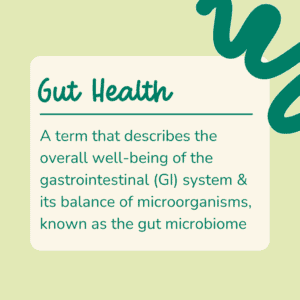
Gut health definition and explanation for chronic illness

Gut health is not just about having a “strong stomach.” Johns Hopkins Medicine and Harvard Health describe it as the balance and function of the gut microbiome, which is the community of bacteria, viruses, and fungi that live in your digestive tract.

A healthy gut usually means:

  • A diverse mix of good gut bacteria
  • A gut lining that is not too irritated or inflamed
  • Good communication between the gut, immune system, and brain

In other words, your digestive system is working together with the rest of your body instead of fighting against it.

Why Gut Health Is Important

Your gut is home to trillions of microbes. Harvard Health explains that this gut microbiome affects digestion, immunity, inflammation, and even mood. 

In addition, the Cleveland Clinic notes that imbalances in gut flora are linked to several chronic conditions, such as autoimmune diseases, type 2 diabetes, irritable bowel syndrome (IBS), inflammatory bowel disease (IBD), and depression.

Gut Health And Digestion

First, your gut helps you break down food and absorb nutrients. When this system is off, you might have:

  • Bloating or gas after meals
  • Diarrhoea, constipation, or swings between both
  • Stomach pain or cramping
  • Trouble digesting certain foods

Over time, poor digestion can also affect how well you absorb vitamins and minerals, which can then affect your energy, mood, and immune system. As a result, even “mild” gut issues can feel huge in day to day life.

Gut Health And The Immune System

A large part of your immune system lives in your gut. Harvard Health and the NIH explain that gut microbes help train the immune system to tell the difference between safe and unsafe signals.

When the gut is in balance, your immune system can respond in a more steady way. When the gut is out of balance, it may send more “danger” signals, which can:

  • Increase inflammation
  • Make autoimmune activity more likely or more intense
  • Affect how your body responds to infections

In other words, your gut is not just a digestion station. It is also a major control centre for how your immune system behaves.

Gut Health, Inflammation, And Chronic Illness

Chronic inflammation is a big part of many long term conditions. The NIH notes that gut dysbiosis, which means an imbalance of gut microbes, can play a role in autoimmune diseases, metabolic conditions like diabetes, and even some neurological symptoms.

For spoonies, this means that supporting your digestive health can sometimes help calm at least one part of the inflammation puzzle, even if it does not fix everything. In practical terms, it is one lever you can gently pull, alongside medication, pacing, and other treatments.

Gut Health And Mental Health

You might have heard of the gut brain connection. Signals travel between your gut and your brain through nerves, hormones, and immune messengers. Harvard Health describes this as a “two way street” where stress can affect the gut, and changes in the gut can affect mood.

Research links the state of your gut with:

  • Depression
  • Anxiety
  • Stress responses
  • Brain fog

This does not mean digestive health is the only cause of mental health symptoms. However, it does mean that a healthier gut can sometimes support a steadier mood and clearer thinking, alongside therapy, medication, and other treatments. In addition, understanding this connection can make it easier to be kind to yourself on days when both your stomach and your feelings are flaring at the same time.

Signs Of An Unhealthy Gut

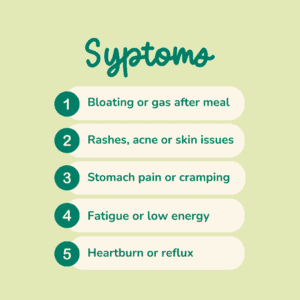
Common gut health symptoms checklist for spoonies

Gut health is not just about bathroom habits, although those do matter. Johns Hopkins Medicine points out that gut problems can show up in many different ways. Because your gut talks to the rest of your body, the signs can be surprisingly wide ranging.

Digestive Signs

Some common digestive signs of an unhappy gut include:

  • Bloating or gas after meals
  • Diarrhoea, constipation, or swings between both
  • Stomach pain or cramping
  • Heartburn or reflux
  • Feeling full very quickly

Whole-Body Signs

Because the gut talks to the rest of the body, you might also notice:

  • Fatigue or low energy
  • Trouble sleeping or poor sleep quality
  • Skin irritation, such as rashes or acne
  • Food intolerances or feeling “off” after certain foods
  • Frequent infections or getting sick often
  • Mood changes, such as feeling more anxious or low

None of these signs prove that gut health is the only problem. However, if several of them show up together, it can be a clue that your gut needs some extra care. In that case, it is worth bringing up with your doctor.

How Gut Health Impacts Chronic Illness

Researchers call it gut dysbiosis when the balance of gut microbes is off. The NIH notes that dysbiosis can play a role in autoimmunity, inflammation, and even some neurological symptoms.

Autoimmunity And Gut Health

In autoimmune diseases, the immune system attacks the body’s own tissues. Some research suggests that changes in gut bacteria and gut lining may influence how likely autoimmunity is to start or flare.

Conditions often discussed in this context include:

  • Inflammatory bowel disease (IBD)
  • Rheumatoid arthritis
  • Type 1 diabetes
  • Some thyroid conditions

Again, digestive health is one factor among many. It is not the cause of every flare, but it can be part of a bigger picture.

Gut Health And Conditions Like IBS, ME/CFS, And Fibromyalgia

Harvard Health and other sources note that people with IBS, ME/CFS, and fibromyalgia often report both gut symptoms and whole-body symptoms, such as pain, fatigue, and brain fog.

In these conditions, the state of your gut may affect:

  • How sensitive the gut is to normal signals
  • How the nervous system processes pain
  • How the immune system responds to stressors

For spoonies, this can mean that when digestion is more stable, flares might feel a little less intense or less frequent, even if they do not disappear. Over time, even small improvements can add up.

Gut Health And Long Covid

The NIH has highlighted that some people with Long Covid show changes in their gut microbiome. These changes may be linked with ongoing symptoms like fatigue, brain fog, and digestive issues.

If you are living with Long Covid, gentle gut support can be one area to explore with your healthcare team, alongside other treatments. It is not a cure, but it can be one more supportive tool.

How To Improve Gut Health As A Spoonie

There is no single perfect gut health diet that works for everyone. However, the Cleveland Clinic and Johns Hopkins Medicine suggest some general steps that can help most people support a healthier gut microbiome. Think of these as gentle options to test, not strict rules.

Food To Support A Healthy Gut

In general, your gut microbes like variety and fibre. Some ideas to support digestion include:

  • Fibre rich foods: vegetables, fruits, beans, lentils, oats, and whole grains (if you tolerate them).
  • Fermented foods: yogurt with live cultures, kefir, kimchi, sauerkraut, miso, or tempeh.
  • Prebiotic foods: onions, garlic, leeks, asparagus, bananas, and oats can help feed good gut bacteria.
  • Healthy fats: olive oil, nuts, seeds, and fatty fish can support gut and heart health.

If you have food intolerances, IBS, IBD, or other gut conditions, you may need to adjust these ideas with a dietitian or doctor. A “healthy gut” does not mean forcing yourself to eat foods that clearly make you worse. Instead, it means finding the best-for-your-body foods that you can actually tolerate.

Food To Be Careful With

For some people, certain foods can make gut symptoms worse. For example, you might notice more problems with:

  • Very processed foods with lots of additives
  • Sugary drinks and snacks that cause big blood sugar swings
  • Large amounts of alcohol
  • Foods you know you do not tolerate well

This does not mean you can never have these foods again. Instead, it means noticing how often they show up and how your body responds, then making choices that protect your spoons where you can.

How To Increase Good Bacteria In The Gut Naturally

If you want to increase good gut bacteria in a natural way, you can:

  • Add small amounts of fermented foods you enjoy
  • Include prebiotic foods that feed good gut bacteria
  • Eat a range of plant foods over the week, not just the same two vegetables
  • Limit unnecessary antibiotics and always follow your doctor’s advice when they are needed

These steps can support your microbiome over time. They are not a quick fix, but they can gently shift your gut environment in a kinder direction.

Lifestyle Habits That Help Gut Health

Gut health is not only about what you eat. Johns Hopkins Medicine highlights lifestyle habits that can support a healthier gut environment:

  • Sleep: Aim for a steady sleep schedule as much as your illness allows.
  • Movement: Gentle movement, such as walking or stretching, can help digestion and mood.
  • Stress reduction: Stress can affect gut motility and gut bacteria, so small calming practices can help.
  • Antibiotics: Use antibiotics only when needed and as prescribed, since they can affect gut flora.

If you have had many rounds of antibiotics, or you live without a gallbladder, it can take time to feel like your digestion is settling again. In the meantime, being kind to yourself as you experiment is just as important as the changes you make.

How To Fix The Gut Microbiome (Realistically)

“Fixing” the gut microbiome sounds big and scary. In real life, it usually looks like small, steady changes over months, not days. For example, you might:

  • Add one new gut friendly food at a time and see how you feel
  • Swap one ultra processed snack for a more whole food option when you can
  • Build a simple bedtime routine to support sleep
  • Practice one short stress relief habit, such as breathing exercises, once a day

Over time, these small steps can add up to a more stable gut environment. It is a slow build, not an overnight makeover.

Supplements And Gut Health

The NIH and the National Center for Complementary and Integrative Health (NCCIH) note that probiotics and prebiotics may help some people, but the evidence is mixed and strain specific. That means:

  • Not every probiotic helps every person or every condition.
  • Some people feel better, others feel no change, and a few feel worse.

Because of this, it is important to:

  • Talk to your doctor before starting probiotics or new supplements.
  • Start low and go slow, especially if you have a sensitive gut.
  • Pay attention to how you feel over several weeks, not just one day.

Overall, supplements can support digestive health, but they are not a magic fix. They work best as one part of a bigger plan that includes food, sleep, movement, and stress care.

The Spoonie Scoop

Amanda suffers from IBS, so she has a sensitive stomach most of the time. As a result, she often eats smaller, more bland snacks and still struggles to eat enough. It is a daily battle, so she does what she can on the days her stomach allows it. Right now, she focuses on getting protein, nutrients, and vitamins in through a few key protein powders and simple foods. On bad days, hitting those basic levels is ‘good enough.’ She is also working with a nutritionist to come up with a better plan for her moving forward.
AMANDA (Co - Founder)
Due to a twisted bowel that led to resection surgery, I have dealt with a lot of gut issues. The slow metabolism, malabsorption, bloating, and painful, irregular stools have been rough, and I still have not found the perfect mix that works. Rather than eating what I did before, I got help from a specialist nutritionist to make changes in phases. I had to learn that the same plan you find online does not work for everyone, and that day to day will be different. Some days I go lactose and gluten free, or skip meat, just to give my system a break. And I do not guilt myself if I have the desire to eat the ice cream, cupcake, or fried food, because I still have to live, even if it might give me issues later. What helps is planning my most mentally demanding tasks for my clearest time of day and giving myself permission to stop when the fog rolls in. I used to push through and then crash. Now I try to stop earlier, even if that means some things wait until tomorrow.
MICHELLE (Co - Founder)

Real Talk

Gut health is a hot topic online, and that can be overwhelming. It can feel like everyone has a “fix your gut in 30 days” plan, a strict list of foods to avoid, or a supplement stack that costs more than your weekly groceries.

If you are living with chronic illness, you already carry a lot. The last thing you need is more guilt every time you eat something that is not on a perfect gut health list.

Here is the honest truth. Digestive health matters, but it is only one part of your life. You might not have the money, time, or energy to cook from scratch every day. You might rely on quick meals or safe foods that are not “ideal” but keep you fed. That does not make you a failure. It makes you human.

You are allowed to:

  • Start small, with one or two changes at a time
  • Choose the best options that fit your budget and energy
  • Keep comfort foods that feel safe for you
  • Say no to extreme diets that flare your symptoms or your anxiety
  • Ask for help with shopping, cooking, or planning when you can

Your worth is not measured by how “perfect” your gut health is. You deserve care, support, and good food even on days when your diet is far from ideal.

Gut health can be a helpful lever, especially for chronic illness. However, it is not a magic cure, and you do not have to fix it all at once. You are allowed to move slowly, listen to your body, and build a way of eating and living that supports both your gut and your mental health.

FAQs

Can gut health affect mood, skin, weight, or hair loss?

Yes, gut health can play a role in several of these areas. Harvard Health and other sources note that the gut brain connection means changes in gut bacteria can influence mood and stress responses. Some studies link gut imbalances with higher rates of depression and anxiety.

Skin conditions, such as acne or rashes, can also be linked with inflammation and gut issues in some people. Weight changes and hair loss may be related to nutrition, absorption, hormones, or chronic illness itself, so it is important to talk to a doctor. Gut health is one piece of the picture, not the only cause.

What foods are best for gut health?

In general, foods that support a healthy gut include:

  • Fibre rich foods, such as vegetables, fruits, beans, lentils, and whole grains (if tolerated)
  • Fermented foods with live cultures, such as yogurt, kefir, kimchi, sauerkraut, miso, or tempeh
  • Prebiotic foods that feed good gut bacteria, such as onions, garlic, leeks, asparagus, bananas, and oats
  • Healthy fats from olive oil, nuts, seeds, and fatty fish

The Cleveland Clinic and Johns Hopkins Medicine both highlight these types of foods for gut support. However, your “best for gut health” list should still be personalised. In practice, this means that if certain foods trigger flares or pain, it is better to work with a doctor or dietitian to find options that are both gut friendly and spoonie friendly.

What foods are worst for gut health?

There is no single “bad food” list that applies to everyone. However, some foods can be harder on the gut for many people, such as:

  • Highly processed foods with lots of additives
  • Sugary drinks and snacks that cause big blood sugar swings
  • Very greasy or fried foods
  • Large amounts of alcohol

For some spoonies, high FODMAP foods, gluten, or dairy may also cause symptoms. On the other hand, some people tolerate these foods well. It is usually best to avoid cutting whole food groups without guidance, especially if you already struggle with appetite, weight loss, or nutrient intake.

Can gut health be restored after antibiotics or gallbladder removal?

Antibiotics can change the gut microbiome by killing both harmful and helpful bacteria. The NIH and Johns Hopkins Medicine note that, over time, gut flora often recovers, especially when supported with:

  • A varied, fibre rich diet (as tolerated)
  • Fermented foods with live cultures
  • Careful use of probiotics, if recommended by your doctor

After gallbladder removal, some people notice changes in digestion, such as loose stools or trouble with high fat meals. In these situations, gentle adjustments, like smaller, more frequent meals and moderate fat intake, can sometimes help. Overall, it is important to work with your healthcare team, since each body responds differently.

Which vitamins or supplements help gut health?

The NIH and NCCIH explain that probiotics and prebiotics may help some people with certain conditions, but results vary. In addition, other nutrients, such as vitamin D or zinc, may also play a role in gut and immune health, especially if you are deficient.

Key points to remember:

  • Always check with your doctor before starting new supplements.
  • Ask about testing for deficiencies like vitamin B12, iron, or vitamin D.
  • Start slowly and watch how your body responds.

Overall, supplements can support digestive health, but they work best alongside food, sleep, movement, and stress care, not instead of them.

by Support

Brain Fog: Causes, Symptoms, And How To Clear Mental Cloudiness

December 2, 2025 in Focus

Brain Fog: The Complete Guide For Spoonies

You open your laptop, stare at the screen, and your brain just spins. It feels like you have too many tabs open, everything is lagging, and the page you need will not load. If you live with chronic illness and deal with brain fog, that “buffering” feeling can show up in almost everything you do.

If you have ever described your mind as “foggy,” “cloudy,” or “buffering,” you are not alone. Many spoonies use the term brain fog to describe this frustrating state where thinking, remembering, and focusing all feel harder than they should.

In this guide, we will walk through what brain fog actually is, common symptoms and causes for people with chronic illness, when to talk to a doctor, and simple ways to clear some of that mental cloudiness so you can protect your spoons.

What Is Brain Fog?

What Is Brain Fog?

Brain fog definition and explanation for chronic illness

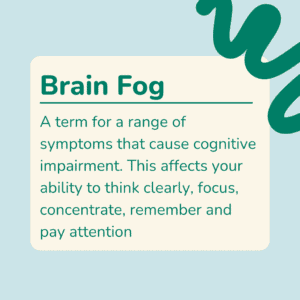
Brain fog is not a formal medical diagnosis. It is a common way people describe changes in thinking, memory, and focus. The Cleveland Clinic explains that brain fog is a form of cognitive dysfunction that can include confusion, forgetfulness, trouble concentrating, and mental cloudiness. Harvard Health describes it as a feeling of “slow thinking” or “fuzzy” thinking that can show up with many different conditions.

In other words, brain fog is a group of symptoms, not a single disease. It can show up on its own or alongside chronic illness, hormonal changes, infections, mental health conditions, or side effects from medication.

Symptoms And Associated Conditions
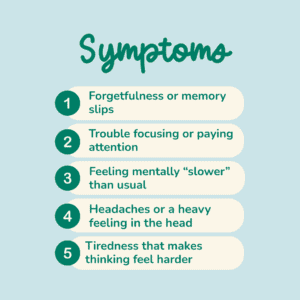
Common brain fog symptoms checklist for spoonies

Common Brain Fog Symptoms

People describe this kind of mental cloudiness in lots of different ways, but some common symptoms include:

  • Forgetfulness or memory slips
  • Trouble focusing or paying attention
  • Feeling mentally “slower” than usual
  • Difficulty finding words
  • Confusion or feeling “out of it”
  • Mental cloudiness or “brain cloudiness”
  • Headaches or a heavy feeling in the head
  • Tiredness that makes thinking feel harder

The Cleveland Clinic notes that these symptoms can affect work, relationships, and daily tasks. Even simple choices can feel like trying to move while weighed down.

Conditions Linked With Brain Fog

Brain fog can show up with many different health situations. WebMD and other medical sources link these symptoms with:

  • Chronic illness and chronic pain
  • Hypothyroidism and other thyroid problems
  • ADHD and other attention difficulties
  • Menopause and hormonal changes
  • Vitamin deficiencies, such as vitamin B12
  • Long Covid and other infections
  • Sleep deprivation and insomnia
  • Depression and anxiety

Medication side effects

For some people, this cloudy thinking lasts a few days after an illness or stressful event. For others, especially those with chronic illness, it can hang around for months or years. As a result, many spoonies talk about “brain fog for years” and look for tools to manage it, not just fix it overnight.

Causes Of Brain Fog

Brain fog usually has more than one cause. Healthline and similar sources group the causes into physical, medical, and lifestyle factors.

Physical Causes Of Brain Fog

Some body-based factors that can add to this mental fuzziness include:

  • Illness and infections
  • Hormonal changes, such as menopause or thyroid shifts
  • Nutritional deficiencies, including low vitamin B12
  • Dehydration
  • Poor sleep or broken sleep
  • Ongoing stress and pain

Medical Conditions Linked To Brain Fog

Certain health conditions can also be linked to brain fog, such as:

  • Autoimmune diseases
  • Hypothyroidism
  • Diabetes
  • Long Covid
  • ADHD

Side effects from some medications

The NIH notes that people with Long Covid often report trouble focusing and memory issues as part of their ongoing symptoms.

Lifestyle Triggers

Lifestyle factors can also make brain fog worse, even if there is an underlying medical issue. Common triggers include:

  • A lot of screen time and constant multitasking
  • Very little movement or exercise
  • Highly processed foods and big blood sugar swings
  • Caffeine withdrawal
  • Irregular meals or not eating enough
  • High stress with very little rest

This does not mean any of this is “your fault.” Instead, it means there are a few areas you and your healthcare team can gently test to see what helps.

How To Diagnose Brain Fog

There is no single “brain fog test.” The Cleveland Clinic explains that doctors usually diagnose this problem by listening to your symptoms, ruling out other conditions, and sometimes ordering blood tests or scans to check for underlying causes.

When To See A Doctor

It is important to talk to a doctor if:

  • Brain fog is ongoing or getting worse
  • You struggle to do daily tasks you used to manage
  • You have other symptoms, such as strong headaches, weakness, or changes in speech
  • You have risk factors for dementia or other brain conditions

Mayo Clinic notes that memory problems and confusion can sometimes be early signs of more serious issues, so it is always better to get checked, especially if something feels “off” or different from your usual level of fog.

If you can, bring notes to your appointment. A simple symptom tracker that records when your brain feels cloudy, what you were doing, and any other symptoms can help your doctor see patterns.

How To Support Your Brain And Ease Brain Fog
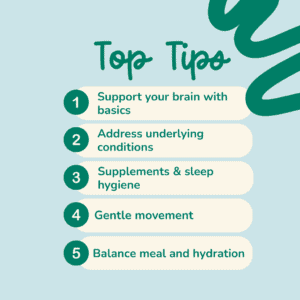
Evidence-based tips to clear brain fog and improve focus

We all wish there were a magic “delete brain fog” button. In reality, most evidence-based strategies focus on gently improving the things that affect how your brain works, such as sleep, food, movement, and stress. Harvard Health and WebMD highlight several practical steps, which we will walk through below.

Support Your Brain With Basics

Some simple but powerful foundations include:

Sleep hygiene: Aim for a regular sleep schedule, a dark and quiet bedroom, and a calming wind-down routine.

Hydration: Even mild dehydration can make your thinking feel more cloudy, so sip water regularly.

Balanced meals: Include protein, healthy fats, and fibre to support steady energy instead of sugar spikes and crashes.

Gentle movement: Light exercise, like walking or stretching, can improve blood flow to the brain and support mood.

Stress management: Practices like breathing exercises, mindfulness, or short breaks during the day can reduce mental overload.

Address Underlying Conditions

If your brain fog is linked to a specific condition, treating that root cause is key. WebMD and NIH resources suggest:

  • Checking for vitamin deficiencies, especially vitamin B12
  • Testing thyroid function if hypothyroidism is suspected
  • Reviewing medications with your doctor to see if side effects include mental fog
  • Managing chronic illnesses, such as autoimmune conditions or diabetes, as well as possible

Sometimes small changes, like adjusting the timing of a medication or adding a supplement under medical guidance, can make a real difference.

Supplements And Brain Fog

Research on supplements is still growing. Some studies suggest that B vitamins and Omega-3 fatty acids may support brain health. However, the NIH stresses that you should always talk to a doctor before starting new supplements, especially if you have chronic illness or take other medications.

Think of supplements as one small tool in a bigger toolbox, not something that fixes everything on its own.

The Spoonie Scoop

Personal experiences with brain fog from spoonies

For me, brain fog shows up as losing words mid-sentence and forgetting what I walked into a room for. I have had days where I could not follow a simple recipe because the steps would not stay in my head. What helps is planning my most mentally demanding tasks for my clearest time of day and giving myself permission to stop when the fog rolls in. I used to push through and then crash. Now I try to stop earlier, even if that means some things wait until tomorrow.
AMANDA (Co - Founder)
In my early twenties, it could take me hours to do something other people finished in thirty minutes. Focusing felt like trying to think through a haze. I was never fully awake, even after coffee. It was like my brain was always half asleep. The sicker I got, the worse and more constant the brain fog became. So I became a master of my Notes app and filled notebook after notebook just to keep track of basic things. I also started planning my work day using what I call ‘focus blocks’ based on the ideas in Manage Your Day-To-Day. I group tasks by how much focus they need and match them to the time of day when my brain is usually clearest. For me, that clear window is the middle of the day, so I do the heavy thinking then. Mornings and late nights are more hazy, so I keep those for lighter admin or creative tasks that do not overstimulate my brain. That way I can still get things done without pushing myself into a full crash.
Michelle (Co - Founder)

Real Talk

Living with brain fog reality and managing mental cloudiness

Let us be honest. Brain fog is not just about being a bit forgetful. It can change how you see yourself. When you cannot trust your memory or your focus, it is easy to feel “stupid,” broken, or behind everyone else.

Sometimes you read the same message three times and still do not take it in. On other days, simple words vanish in the middle of a sentence. You can lose track of what you were doing and then feel angry at yourself for “messing up again.”

On top of that, other people often do not see it. From the outside, you might look fine. Inside, your brain feels like an old computer that keeps freezing. That mismatch can be lonely and painful.

Here is the truth. Brain fog is a symptom, not a moral failure. It is your body and brain trying to cope with illness, stress, or overload. Needing notes, alarms, or extra time is not laziness. It is a smart way of adapting.

You have full permission to:

  • Write everything down
  • Ask people to repeat things
  • Take breaks in the middle of tasks
  • Say “I cannot hold that in my head right now”
  • Choose slower, simpler systems that your brain can handle

You deserve tools and support that fit the brain you have today, not the brain you wish you still had.

Brain fog may still show up. Some days will be rough. That does not mean you are failing. It means you are living with a hard thing and doing your best with the spoons you have.

FAQs About Brain Fog

What is brain fog?

Brain fog is a non-medical term people use to describe changes in thinking, memory, and focus. The Cleveland Clinic and Harvard Health explain that it is a form of cognitive dysfunction that can include forgetfulness, confusion, trouble concentrating, and mental cloudiness. It is a symptom group, not a disease on its own, and it often shows up alongside chronic illness, hormonal changes, infections, or medication side effects.

Will brain fog go away?


Sometimes brain fog improves once the trigger is treated, such as recovering from an infection, improving sleep, or correcting a vitamin deficiency. In other cases, especially with long term chronic illness, brain fog may come and go in waves. Working with your doctor to identify causes and gently adjusting sleep, stress, nutrition, and medication can often reduce how strong or how frequent it feels, even if it does not disappear completely.

Can brain fog be cured?

There is no single cure for brain fog because it has many possible causes. For some spoonies, treating a thyroid issue, addressing vitamin B12 deficiency, or changing a medication can make a big difference. For others, especially with conditions like autoimmune disease or Long Covid, the focus is more on management and support than a total cure.

How do you get rid of brain fog?

You probably cannot clear brain fog instantly, but you can often reduce it over time. Medical sources like Harvard Health and WebMD suggest:

Improving sleep hygiene and protecting your rest

Staying hydrated throughout the day

Eating balanced meals with protein, healthy fats, and fibre

Adding gentle movement, as tolerated

Managing stress with small, realistic tools

Treating underlying issues, such as vitamin B12 deficiency or thyroid problems, with your doctor’s help

Think of it as building a brain-friendly routine rather than chasing a quick fix.

How to clear brain fog or stop it from getting worse?

To clear brain fog or stop it from growing, it helps to:

  • Notice your patterns: track when your thinking is most cloudy and what seems to trigger it
  • Pace your mental tasks: schedule the most demanding things for your clearest time of day
  • Reduce overload: limit multitasking, constant notifications, and endless scrolling
  • Use external supports: lists, reminders, timers, and simple routines so your brain carries less load
  • For many chronic illness warriors, “stopping brain fog” looks like reducing the intensity and frequency, not removing it completely.

Can brain fog cause headaches or dizziness?

Brain fog often appears alongside headaches or dizziness, especially in conditions like migraine, POTS, or Long Covid. While this symptom does not directly “cause” those problems, the same underlying condition can cause all three. If headaches or dizziness are new, strong, or changing, the Cleveland Clinic and Mayo Clinic both recommend seeing a doctor to rule out other issues.

 Is brain fog dangerous or a sign of dementia?

Brain fog on its own does not automatically mean dementia. However, ongoing memory problems, confusion, or changes in thinking that affect your daily life should always be checked. Mayo Clinic notes that a healthcare professional can help tell the difference between common brain fog linked to things like fatigue or vitamin deficiency and more serious conditions such as dementia or other brain problems.

Which foods or deficiencies are linked to brain fog?

Nutrition can influence brain fog. Medical sources, including the NIH and WebMD, highlight:

  • Vitamin B12 deficiency
  • Low iron or other nutrient deficiencies
  • Diets high in ultra processed foods and sugar
  • Irregular eating patterns that cause blood sugar swings

For spoonies, this might mean working with a doctor or dietitian to test for deficiencies, adjust supplements safely, and build meals that support steadier energy. Always check with your healthcare team before starting new supplements, especially if you take other medications or live with complex chronic illness.

by Support

Post Exertional Malaise: Symptoms, Causes, And How To Manage It

December 2, 2025 in Energy, Fatigue

Post Exertional Malaise (PEM): Why One “Big Day” Can Wipe You Out For Weeks

Post exertional malaise is that crash that hits hours, or even a day, after you do something that looks tiny from the outside.

You know that rare day when you finally have a tiny bit of energy. You try to live like a “normal” human for five minutes, and your body responds by pulling the fire alarm.

The bone deep fatigue, the pain, the brain fog so thick you forget your own postcode, is not you being “dramatic” or “unfit.” It has a name: Post Exertional Malaise (PEM).

PEM is one of the most misunderstood parts of chronic illness. Friends, doctors, even well meaning physios might tell you to “just exercise more.” Meanwhile your body is quietly screaming, “Actually, this is making me worse.”

Because of that, this guide is here to change the story.

We will walk through what post exertional malaise is, how it shows up, why it happens, as far as science currently knows, who gets it, how long PEM can last, and what you can realistically do to avoid or recover from post exertional malaise as much as possible.

No toxic positivity. No “just push through.” Instead, you get evidence based info, lived experience, and practical pacing tools for spoonies trying to survive PEM without losing their mind.

What is Post Exertional Malaise (PEM)?

What is Post-Exertional Malaise (PEM)?
Post-exertional-malaise definition and explanation for chronic illness

Post exertional malaise (PEM) is a worsening of symptoms after physical, mental, or emotional exertion that would not have caused a problem before you became ill.

Medical bodies like the CDC’s ME/CFS overview describe PEM as a core symptom of ME/CFS. Even small activities can trigger a flare of fatigue, pain, sleep problems, and cognitive issues that can last days, weeks, or longer. It is also widely reported in Long Covid, POTS, and other chronic conditions.

In simple terms, your body spends energy like a broken credit card. A tiny transaction can send you into overdraft.

Post exertional malaise is different from:

  • General tiredness or “malaise symptoms” after a busy day
  • DOMS, Delayed Onset Muscle Soreness, after a workout
  • Feeling “a bit off” after poor sleep

With post exertional malaise, the crash is completely out of proportion to what you did. For example, you might:

  • Shower and wash your hair
  • Have a short conversation
  • Answer a few emails
  • Walk to the letterbox

Then 12 to 48 hours later, you are hit with PEM fatigue, pain, flu like symptoms, or a full body shutdown that feels like your system has been unplugged.

PEM, POTS, Long Covid, and DOMS, related but not the same
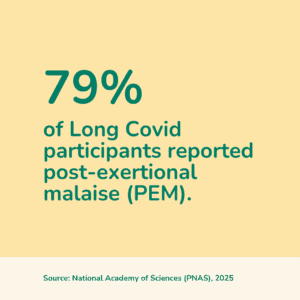
Post-exertional malaise statistics in chronic fatigue patients

Post exertional malaise often shows up alongside other conditions. As a result, it can be confused with different types of “malaise symptoms.”

Many people with POTS and chronic fatigue syndromes experience post exertional malaise POTS style crashes after standing, walking, or even showering. This might be labelled as post exertional malaise fatigue syndrome in some medical notes. However, the lived experience is the same: activity now, crash later.

A big point of confusion is post exertional malaise vs DOMS:

  • DOMS is muscle soreness after a workout. It usually peaks 24 to 72 hours after exercise and often improves with gentle movement.
  • PEM is a whole body symptom flare. It includes fatigue, pain, cognitive issues, and flu like feelings, and it is often triggered by much smaller activity. Movement can make it worse.

Articles like Healthline’s overview of PEM and patient organizations highlight this difference. Their goal is to help clinicians recognize PEM instead of assuming someone is just “deconditioned.”

In Long Covid, many people report “malaise Covid” symptoms that match post exertional malaise. They describe delayed crashes after activity, worsening fatigue, and cognitive problems. Because of this, groups like Long Covid Europe are pushing for better recognition of PEM in post viral conditions, not only in ME/CFS.

Symptoms and triggers of post exertional malaise
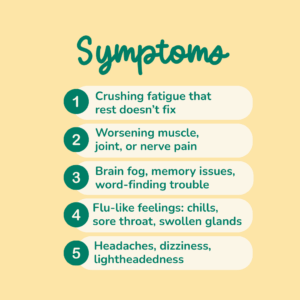
Post-exertional malaise symptoms checklist for spoonies

PEM does not look the same for everyone. Even so, common post exertional malaise symptoms include:

  • Crushing fatigue that rest does not fully fix
  • Worsening pain, muscle, joint, or nerve
  • Brain fog, memory issues, trouble finding words
  • Flu like feelings, chills, sore throat, swollen glands
  • Headaches, dizziness, lightheadedness
  • Sleep problems, insomnia or unrefreshing sleep
  • Sensory overload, light, sound, or smell sensitivity

These symptoms are described across sources like the Solve ME/CFS Initiative, the CDC, and the ME Association’s PEM guide.

Common PEM triggers include:

  • Physical activity, walking, housework, showering, exercise
  • Cognitive load, work tasks, studying, reading, screen time
  • Emotional stress, conflict, anxiety spikes, big life events
  • Sensory load, noisy environments, bright lights, crowded spaces

For some people with POTS, MCAS, or Long Covid, even standing upright too long can be enough to trigger post exertional malaise.

In addition, clinical reviews of PEM, for example on Physio Pedia and in articles on Healthline, point out that there is no single proven treatment yet. Instead, pacing, symptom management, and careful choices about activity are still the main tools people have. Evidence is limited, and what helps one person may do nothing, or make things worse, for another. This is why many spoonies focus on learning their patterns and protecting their spoons as much as possible.

Why does post exertional malaise happen?

Science is still catching up. Even so, several theories are being explored by researchers and organizations like the NIH and the Solve ME/CFS Initiative:

  • Immune dysfunction. The immune system may stay switched “on,” which can cause inflammation and flu like malaise symptoms after exertion.
  • Abnormal energy metabolism. Cells may struggle to produce and use energy properly, so activity drains the system faster than it can recover.
  • Autonomic nervous system issues. Problems with heart rate, blood pressure, and circulation, often seen in POTS, can make even small efforts feel like running a marathon.
  • Post viral and Long Covid mechanisms. For many, PEM started after an infection, including Covid, and overlaps with “malaise Covid” experiences described by groups like Long Covid Europe.

None of these theories fully explain PEM yet. However, they all point to one important truth.

Post exertional malaise is physiological, not a character flaw.

If you have ever been told it is “just anxiety” or “just deconditioning,” you are not imagining how wrong that felt.

The Spoonie Scoop 

Personal experiences with post-exertional malaise from spoonies

For me, a 'good day' is like winning the lotto. Most of my days now are bed bound and in pain, so when a little bit of energy shows up, it feels precious and rare. However, I know that if I use it, I will almost definitely pay for it with two or three days of being wiped out. Sometimes you just have to live in those moments. On those days I will try to catch up on housework, errands, or family life, and yes, I will overdo it. I go into it knowing a crash is coming. When good days are this unpredictable, you grab them with both hands and ask for forgiveness later, because you never know when the next one will come.
AMANDA (Co - Founder)
PEM often shows up after 'productive Saturdays.' Because I work a 9 to 5 and build Alivio before and after work, there is almost no time during the week for errands. As a result, I try to pack everything into one day: cleaning, washing, shopping, meal prep, all in one go, so I do not have to get dressed and drive multiple times. That kind of day usually means a Sunday crash, couch bound for most of the day. At least this way my life feels a little more balanced. I rest whenever I can, but I also still have to live my life. Now I plan around it. For example, no social activities on Sundays, a lighter workload on Mondays, and no gym on Mondays after a big Saturday. In other words, it is all about working with my body so I do not miss out on living completely.
MICHELLE (Co - Founder)

How to live with post exertional malaise without losing your mind 

Learn your baseline and spoons

First, start by tracking your symptoms for a few weeks. Note what you did the day before a crash. Look for patterns, walking distance, screen time, conversations, appointments, and how many spoons each thing seems to cost you.

This is the foundation of pacing and spoon management. Groups like ME Action’s pacing resources and the ME Association recommend this kind of tracking.

Pacing, the unsexy superpower 

Pacing is about staying within your spoons so you do not constantly trigger PEM.

Practical pacing strategies include:

  • Break tasks into smaller chunks with built in rest.
  • Use timers for activity and rest, for example 10 minutes on, 20 minutes off.
  • Alternate physical, cognitive, and emotional tasks.
  • Schedule recovery days after anything big, like appointments or social events.

Pre emptive rest

Next, do not wait until you feel awful. Rest before you crash.

  • Plan lie down breaks even on “good” days.
  • Use sensory friendly rest, low light, minimal noise, comfy position.
  • Treat rest as a non negotiable medical tool, not a luxury.

How to recover from post exertional malaise

When PEM hits, you can shift into recovery mode:

  • Drop your activity level below your usual baseline.
  • Prioritize essentials only, meds, food, hydration, bathroom.
  • Use tools that help you rest, eye masks, earplugs, heat packs, cooling pads, fidgets, coloring pages, or gentle audio.
  • Ask for help if you can for meals, chores, or childcare.

Recovery time varies. Patient reports collected by sites like Health Rising suggest post exertional malaise can last hours, days, or weeks depending on the trigger and severity.

Real Talk

Living with post-exertional malaise reality for chronic illness

Post exertional malaise forces you to make choices that most people never have to think about. Spend your spoons on a shower, a medical appointment, or a rare fun outing, and you might be trading that for a full day, or several days, of being wiped out.

You can track your spoons, pace carefully, and build in rest. Even then, PEM can still hit after something small, like a slightly longer conversation or a surprise errand. That unpredictability is one of the hardest parts of post exertional malaise.

Sometimes you will choose to spend all your spoons on purpose, a birthday, a visit with someone you love, a once in a year event, knowing a crash is coming. At other times you will cancel plans, leave messages unread, or let the house stay messy because you can feel PEM breathing down your neck.

None of those choices make you weak, dramatic, or lazy. They are rational responses to a body where activity today can mean being bed bound tomorrow.

There is no guaranteed way to avoid PEM, and no quick fix to recover from it. What you can do is learn your patterns, protect your spoons where you can, and give yourself permission to live a real life inside your limits, not just always in survival mode.

If post exertional malaise is shaping your days, you deserve care, accommodations, and support that take that reality seriously, not advice to “just push through” and hope for the best.

Post exertional malaise

Why is post exertional malaise delayed?

PEM is often delayed by 12 to 48 hours because the processes that drive it, like immune activation, changes in blood flow, and problems with how cells make and use energy, do not peak straight away. Clinical descriptions from groups such as the CDC and ME charities note this delayed crash as a key feature of post exertional malaise.

How long can PEM last?

Post exertional malaise can last a few hours, several days, or even weeks, depending on how many spoons you spent, your underlying condition, and what else is going on with your health. Patient reports collected by sites like Health Rising show that bigger exertion, for example travel or major life events, can trigger longer and more severe PEM flares.

Is PEM the same as being unfit or deconditioned?

No. Deconditioning can make symptoms worse, but post exertional malaise is not just a fitness issue. Clinical overviews, including those referenced by the CDC and ME charities, describe PEM as a core feature of ME/CFS and some Long Covid cases, where even very small efforts can cause a delayed crash that rest and training do not simply fix.

Can supplements cure PEM?

There is no proven supplement that cures PEM. Some people try things like magnesium, B vitamins, or mitochondrial support, but clinical reviews on Physio Pedia and articles on Healthline stress that evidence is limited and results vary. It is important to talk to your doctor before starting anything new.

Is PEM a disability?

Post exertional malaise itself is a symptom, but for many people it is disabling. When even basic activities can trigger days of being bed bound or couch bound, work, study, and social life can be heavily affected. Advocacy groups and patient led organisations, including Long Covid Europe, are pushing for better recognition of PEM in disability assessments and workplace accommodations.

by Support

Spoon Theory: A Complete Guide For Spoonies And Allies

December 2, 2025 in Energy

Why Millions Of People Are Obsessed With Counting Spoons

Picture this: you wake up and immediately know it’s going to be a low-energy day.

Your energy tank isn’t just low, it’s running on fumes before you’ve even gotten out of bed. Every chronic illness warrior knows this feeling, the instant calculation that happens between consciousness and that first reluctant movement.

Should you shower today or save that energy for work? Can you handle grocery shopping AND cooking dinner, or is that asking too much of a body that’s already waving the white flag?

For decades, people with chronic illness have been making these strategic decisions every single day. We’ve been energy economists out of necessity, rationing our resources. But we didn’t have language for it.

We couldn’t explain to healthy people why we looked fine yesterday but can barely function today. Why that fun night out last week is still sending us recovery bills. Why we have to choose between being social and being productive.

Then came 12 spoons in a diner, and everything changed.

Suddenly, millions of people had a way to explain the unexplainable. The invisible became visible. The chronic illness community finally had a metaphor that made sense.

This is the story of how Spoon Theory became a revolution.

Spoon theory guide cover with illustration of spoons on green background, pink and white text, and a pink arm holding a spoon.

FREE Spoon Theory Guide

Spoon theory is a real tool used by millions of spoonies just like you. This freebie includes: 

  • 7-day spoon audit & reflection exercise
  • Emergency protocol planner for crisis days
  • Spoon optimisation strategies
  • Printable weekly spoonie tracker template
Why Spoon Theory Matters So Much

Why Spoon Theory Matters So Much

Trying to explain all of this to healthy people was exhausting. On the outside we might look fine, yet the next day we can barely function. That fun night out last week can still be sending recovery bills days later. Often we are forced to choose between being social and being productive, and that trade off is hard to explain without a shared metaphor.

Then came twelve spoons in a diner, and everything changed.

Suddenly, millions of people had a way to explain the unexplainable. The invisible became visible. The chronic illness community finally had a metaphor that made sense. That metaphor is called spoon theory, and it has become a lifeline for people with chronic illness and for many people living with long term mental health conditions.

If you want to see how we use spoon theory in real life pacing, you can also read our guide on post exertional malaise and pacing.

Where Did Spoon Theory Originate And Who Created It?

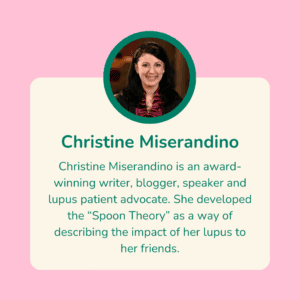
Christine Miserandino creator of spoon theory

Spoon theory did not start in a research lab. It started in a diner in 2003, with a simple question from a friend.

Christine Miserandino was having lunch with her best friend when the question came up. “What is it like to have lupus?” She had been asked this before and had tried explaining the fatigue, the unpredictability, the way her body could betray her without warning. Even with all that effort, her friend never really got it.

This time felt different.

Christine looked around the diner, grabbed a handful of spoons from nearby tables, and counted out twelve. “You have lupus,” she told her friend, handing over the spoons. Then she walked her through a typical day, taking away spoons for each activity. Shower. That is one spoon. Getting dressed. Another spoon. Making breakfast. More spoons gone.

By lunchtime, her friend clutched her remaining spoons like precious currency and finally understood the weight of every decision. “I do not have enough spoons for the rest of the day,” her friend whispered. Christine smiled and said, “Now you get it.”

How one story about spoons went viral

Christine later shared this story in an essay on her website butyoudontlooksick.com. The piece spread through chronic illness communities and later appeared in teaching resources and medical discussions, including an ACS teaching resource that describes spoon theory as a way to understand reduced energy in disability and chronic illness.

From there, spoon theory moved into lupus groups, chronic illness forums, and social media communities. Lupus and chronic illness communities still share versions of this story to explain energy limits in simple terms.

Major organisations, including the Cleveland Clinic, now describe spoon theory as a metaphor that helps people understand how chronic illness affects daily energy. The term “spoonie” was born, and millions of people finally had an identity, a community, and a way to make the invisible visible.

The original spoon theory story used twelve spoons in a diner to explain life with lupus.

What Is Spoon Theory In Simple Terms?

Spoon theory definition and explanation for chronic illness

So, what is spoon theory in simple terms.

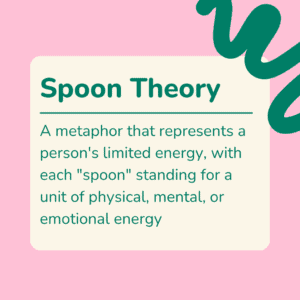
Spoon theory uses spoons as a unit of energy. Each activity in a day “costs” a certain number of spoons. People with chronic illness or disability often start the day with fewer spoons than non disabled people and lose them faster.

As lupus and chronic illness communities explain it, you might start the day with ten spoons on a good day, six spoons on an average day, or two spoons on a flare day. Every task, from showering to answering emails, takes one or more spoons. When you run out, you are done. There is no magical refill button.

People living with long term mental health conditions also use spoon theory to explain emotional and cognitive fatigue. It is not just about physical tiredness. It is about the total energy it takes to move through the world.

How Does Spoon Theory Work Day To Day?

Everyday tasks like getting out of bed, showering, commuting, working, socialising, and cooking all “cost” spoons. Chronic illness communities often describe this as energy budgeting. You only have so many spoons, so you have to choose where to spend them.

When someone runs out of spoons, they may experience crashes, flare ups, or shutdowns and need recovery time. For many spoonies, this can look like lying in a dark room, cancelling plans, or needing several days of quiet to get back to baseline.

In practice, spoon theory looks like this. You wake up, check in with your body, and decide how many spoons you realistically have. Then you plan your day around that number, not around what you wish you could do.

If you enjoy practical tools, you will probably like our future “Ultimate Guide: Spoon Theory” resource, which will build on this spoon theory guide and help you map your spoons across the week.

Spoon theory started with lupus, but it did not stay there. Chronic illness communities use spoon theory to describe life with conditions like lupus, chronic pain, migraine, POTS, and MS. For example, the Lupus Foundation of America explains how lupus can cause severe fatigue and pain. The National MS Society describes fatigue and mobility issues in MS. The American Migraine Foundation talks about migraine as a neurological disease with sensory sensitivity and exhaustion. All of these experiences fit naturally into the spoon theory metaphor.

People with POTS, described by Dysautonomia International, often talk about how standing, showering, or walking can cause dizziness, rapid heartbeat, and intense fatigue. For them, even basic upright activities can burn through spoons quickly.

Spoon theory also applies to mental health. Many people use it to describe the energy cost of depression, anxiety, PTSD, and other conditions. Mental health discussions of spoon theory point out that tasks like showering, answering messages, or leaving the house can cost far more spoons when someone is depressed or anxious.
In short, spoon theory is used by people with chronic physical illness, chronic pain, and long term mental health conditions. If your energy is limited and unpredictable, spoon theory probably applies to you.

How To Calculate Your Way To Better Days With Spoon Theory

Spoon theory is not just a cute metaphor. It is a practical strategy that chronic illness spoonies use to measure and manage their days. Every spoonie becomes an energy accountant by necessity.

The secret is not having more spoons. It is becoming incredibly strategic about the ones you have.

The Spoon Audit Method

Before you can manage your spoons, you need to know where they are actually going. A simple spoon theory audit can help.

Morning spoon check. When you wake up, rate your energy from one to twelve spoons. Note what influenced this number. Sleep quality, pain levels, stress, weather, hormones, and medication timing can all change your spoon count.

Activity logging. During the day, record the spoon cost of your activities. Do not just track the big ones. Social, mental, and emotional demands can drain spoons as much as physical tasks. Because of this, it helps to pay attention to “energy leeches,” people or situations that leave you feeling wiped out without a clear reason.

Evening review. At night, compare how many spoons you thought you had with how many you actually used. Then notice where the spoon leaks happened. Which activities cost more than you expected.

Weekly spoon patterns. After a few weeks, look for patterns. Which days are your naturally higher spoon days. Which days are consistently low. As a result, you can start to plan your week. Schedule demanding tasks on higher energy days and protect low spoon days for rest and recovery.

Michelle says, “These patterns will not always be the same because your health is unpredictable, but this gives you a base to start with. I find Mondays the hardest because I do house cleaning, social activities, and shopping on Saturdays, crash on Sundays mostly resting, but still feel the hangover on Mondays. Add a social activity on Sunday. That tired hangover extends even longer.”

If this sounds like a lot, you are not alone. That is why we are building tools like a personal spoon tracker to make this process less overwhelming and more playful.

Your Daily Spoon Allocation

Here is the fundamental difference. Healthy people often feel like they have unlimited spoons that refill throughout the day. People with chronic illness or long term mental health conditions get a maximum of eight to twelve spoons, and that number changes daily based on factors outside their control.

The Spoon Cost Breakdown

Every activity has a price tag, and these costs can vary dramatically depending on your current state. The same activity can cost different amounts on different days. That shower that costs one spoon on a good day might cost three spoons during a flare and leave you needing a nap. This unpredictability is part of what makes chronic illness so hard to manage.

Spoon Theory Do’s And Do Not’s

Do:

  • Check your spoon count each morning.
  • Plan around actual capacity, not wishful thinking.
  • Save spoons for what matters most to you.
  • Build buffer spoons into your day.
  • Accept that some days you will have fewer spoons.

Do not:

  • Fall into the overdraft trap, “I will just push through today.”
  • Ignore your body’s spoon signals.
  • Compare your spoon count to others.
  • Feel guilty about low spoon days.

Here is what many healthy people do not understand. You cannot borrow spoons from tomorrow. When you overdraw from your spoon limit, your body sends you an invoice with brutal interest rates.

Medical research on conditions like ME and chronic fatigue syndrome describes this as post exertional malaise. Symptoms worsen twelve to forty eight hours after activity, and recovery can take days or weeks. NHS guidance on chronic fatigue and pacing talks about this delayed crash and the importance of managing energy carefully.

Spoon theory transforms “I am too tired” into “I have calculated my energy budget and this activity exceeds my available resources.” Suddenly, you are not lazy or dramatic. You are a careful financial planner working with a limited budget.

The Spoonie Scoop

Spoonie Scoop Pink
Twenty plus years in, most days I am working with five spoons or less. I still overdraft on good days because letting go of ‘normal’ is harder than it sounds. I used to panic about losing friends who could not handle my limitations. The right people do not just tolerate your spoon management. They help you protect it. Real friends do not guilt trip you for choosing your health.
AMANDA (Co - Founder)
I thought chronic illness was like the flu. You rest up and bounce back. Wrong. I spent years fighting my spoonie energy, desperately trying to hold onto my old life where I could work, study, work out, and go out in one day. The wake up call came when I realised I was making myself sicker by refusing to accept my new reality. Everything changed when I stopped fighting my spoons and started working with them. It turns out, energy friendly hobbies are actually more fun.” What helps is planning my most mentally demanding tasks for my clearest time of day and giving myself permission to stop when the fog rolls in. I used to push through and then crash. Now I try to stop earlier, even if that means some things wait until tomorrow.
MICHELLE (Co - Founder)

Spoons Not Your Thing? Try These 

Alternative metaphors to spoon theory for chronic illness

Look, we get it. Not everyone vibes with spoons.

Maybe the cutlery metaphor feels too cutesy for your chronic illness reality. Or maybe you have tried spoon theory and it just does not click with how your brain works. That is completely okay.

The chronic illness community is creative, and we have developed plenty of other ways to explain our energy limitations.

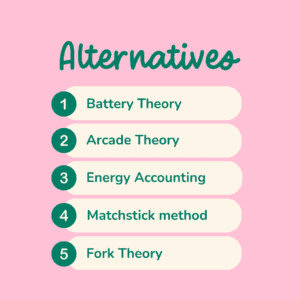
Battery theory

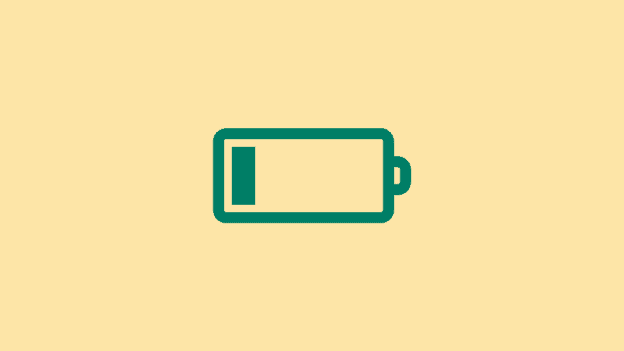
Your body is a phone battery. You start each day with a certain percentage, and every activity drains you. Unlike a phone, you cannot just plug in for a quick charge. Some days you wake up at one hundred percent, other days you are already at thirty percent. The goal is to make your battery last all day without completely dying.

Arcade theory

Best for: Tech savvy people who understand device limitations.

You start each day with a handful of tokens. Every activity costs tokens. Some cost one, others cost five. Once you are out of tokens, the game is over. You cannot earn more tokens during the day, so you have to choose your games wisely.

Best for: People who like gaming metaphors and clear transactional thinking.

Energy accounting

Forget metaphors entirely. You can track your energy like a bank account. You have deposits, rest, good sleep, low stress activities, and withdrawals, work, social events, medical appointments. The goal is to avoid overdrafting your energy account.

Best for: People who prefer straightforward, business like approaches.

Each day you have a box of matches. Every task burns one or more matches. Some activities are quick burns, others are slow burns that consume multiple matches. Once your matchbox is empty, you are done for the day.

The matchstick method 

Each day you have a box of matches. Every task burns one or more matches. Some activities are quick burns, others are slow burns that consume multiple matches. Once your matchbox is empty, you are done for the day.

This method can feel especially helpful if you like visual reminders. You might picture a small row of matches on your bedside table in the morning. As the day goes on, you mentally “light” a match for each thing you do. Getting dressed might burn one match. A medical appointment could burn three. A big social event might use up the rest of the box.

The matchstick method also makes it easier to explain your limits to other people. Instead of saying “I am too tired,” you can say, “I am out of matches for today, I need to save tomorrow’s matches so I can get to my appointment.”

Best for: Visual learners who like the imagery of finite resources and clear start and end points.

Fork theory

Fork theory is a twist on spoon theory that focuses on mental health. You have a limited number of forks each day for dealing with difficult, uncomfortable, or mentally challenging tasks. Unlike spoons, forks are specifically for the hard stuff. The conversations you do not want to have, the emails that stress you out, the decisions that drain you.

Best for: People whose chronic illness heavily impacts mental and emotional energy.

The beauty of these alternatives is that they all acknowledge the same fundamental truth. Your energy is limited, valuable, and worth protecting.

Pick the metaphor that speaks to you. Or create your own. The important thing is not the utensil or device you choose. It is having language for your experience.

The Energy Management Secret That Doctors Do Not Tell You

Here is what no one tells you about spoon theory. It is not just about counting spoons. The real power comes from using spoon theory as an energy management system that actually fits your life.

The secret is not having more spoons. It is becoming incredibly strategic about the ones you have.

Michelle’s Pro Tips

Habit stacking

“Habit stacking changed everything for me. Instead of treating each task as a separate spoon expense, I learned to bundle activities together. You get more value for your energy investment.”

Examples:

  • Slow cooker meals and one pan dinners that cook while you rest.
  • Powder vitamin and mineral supplements mixed into your morning protein smoothie.
  • Lymphatic draining with a loofah in the shower and a lymphatic face massage when you apply moisturiser.
  • Listening to audiobooks or podcasts while doing gentle stretches.
  • Breathing exercises during TV shows or while you sit in a warm bath.

High ROI spoon investments

Smart spoonies invest their spoons in activities that cost energy now but save spoons later.

Examples:

  • Meal prep on good days and batch cooking freezer meals.
  • Automating bills, subscriptions, and recurring orders.
  • Planning an “errand day” so appointments are grouped and you minimise driving and getting dressed multiple times.
  • Using online grocery delivery instead of in store shopping when you can.
  • Setting up medication organisers for the entire week.
  • Creating a capsule wardrobe to reduce daily outfit decisions.

Emergency spoon protocol 

When you are running dangerously low on spoons and everything feels overwhelming, it is time to shift into survival mode and protect what little energy you have left. Your only job right now is damage control and recovery.

Your emergency protocol might include:

  • Delegate to a partner, family member, or friend if possible.
  • Communicate your limits clearly to everyone who needs to know.
  • Cancel non essentials without guilt.
  • Lower standards temporarily. Done is better than perfect.
  • Activate your pre made meal stash or simplest food options.
  • Focus on rest and gentle self care that actually helps you recover.

Real Talk

Let us be honest about something. Spoon theory is powerful, but it is not magic.

Spoon theory will not cure your chronic illness. It also will not magically hand you more energy. It definitely will not stop well meaning people from saying “but you look fine” when you are running on fumes.

Some days, even perfect spoon management feels impossible. You wake up already in debt, every task feels impossible, and the idea of counting spoons makes you want to throw the whole cutlery drawer out the window.

There are a few hard truths to keep in mind.

  • Unpredictable flare days: Sometimes your body throws the entire spoon budget out the window. You planned for eight spoons, but you wake up with two.
  • Mental health struggles: Depression and anxiety do not always follow spoon logic. A physically good day can still feel like a low spoon day when your mental energy is drained.
  • Guilt and pressure: Spoon theory can become another thing to “fail” at. If you overspend your spoons, you might beat yourself up for “not managing properly.”
  • Others do not get it: Not everyone will understand or respect your spoon limitations. Some people will still push, guilt trip, or dismiss your energy management.
  • The comparison trap: Your five spoon day might look very different from another spoonie’s five spoon day. Chronic illnesses vary wildly, and so do spoon allocations.

It is important to remember that spoon theory is a tool, not a rule. It is meant to help you understand and communicate your limits, not create new ways to judge yourself.

Some days you will nail your spoon budget. Other days you will completely ignore it and deal with the consequences. Both are okay. The goal is not perfection. The goal is to live as kindly as possible with the body and brain you have.

Your spoons, your rules.

Your Energy, Your Rules

Here is what we want you to remember from all of this.

Whether you count spoons, track battery percentages, or budget energy like a financial planner, the method is not what matters most. What matters is that you finally have permission to acknowledge your limits.

For too long, chronic illness warriors have been expected to operate like healthy people while managing bodies that do not cooperate. We have been told to “push through” real physical and mental limitations.

Spoon theory says enough.

Remember that your energy is finite and your limits are real. Needing to pace yourself is not weakness. It is self care and self respect.

Over time, we start saying no without guilt. We begin planning our days around our actual capacity instead of our wishful thinking. That shift helps us treat our energy like the precious resource it is.

Most importantly, we start believing that our lives, even with limitations, still have value and meaning.

Spoons, energy, and limits all belong to you. You choose how to spend your spoons, how to protect your energy, and where to draw the line.

The Spoon Theory is a way to explain what it’s like to live with limited energy due to chronic illness or disability. Each spoon stands for a unit of energy. When you run out of spoons, you can’t do any more that day.
 
Read the original essay by Christine Miserandino here.
Christine Miserandino created the Spoon Theory. She wrote about it in her essay “The Spoon Theory” after using spoons at a diner to explain her experience with lupus.
No, the Spoon Theory is used by people with all kinds of invisible illnesses, disabilities, chronic pain, mental health conditions, and neurodivergence. Anyone who deals with limited energy or unpredictable stamina can use it.
Yes! Some people prefer the Battery Theory, Points System, or Gas Tank Metaphor. Use whatever metaphor helps you communicate your needs best.
Share Christine’s original essay, use spoons as a visual, or describe how every activity costs energy. Remind people that you can’t always predict what will use up your spoons

by Support

Natural relief with Alivio Plus for effective pain management solutions.

Welcome to the Alivio Forum

October 24, 2025 in Uncategorized

Online mental health support platform Alivio Plus website on laptop and smartphone screens.

Meet your spoonie tribe!

Joining the FREE forum unlocks real support for spoonies, by spoonies. As a member, you’ll get: 

  • Open forums for daily support and advice
  • Condition-specific groups to find your people
  • Private messaging for one-on-one connection
  • Virtual meetups and community events
  • Monthly loyalty point giveaways and rewards

A Space Built for Spoonies, by Spoonies

At Alivio, the vision is to create a space where every person living with chronic illness feels seen, heard, and supported. The forum is more than just a message board. It is a home base for connection, kindness, and practical support. Here, anyone can share a journey, ask questions, celebrate wins, and find real understanding from people who truly get it. Whether seeking advice, friendship, or just a safe place to vent, there is a place here for everyone.

Our Commitment to You

Having a safe, welcoming environment is essential. That’s why Alivio is dedicated to keeping the space positive, inclusive, and spoonie-friendly.

The approach is shaped by:

  • Direct feedback from the community
  • Collaboration with chronic illness advocates
  • Input from medical and mental health professionals
  • Guidance from accessibility experts

Our Core Values

  • Voice & Expression:

    Every fellow warrior should feel empowered to share a journey. Every voice matters, whether celebrating a win or working through a tough day.

  • Authenticity:

    Real stories and genuine sharing are valued. Misinformation and misrepresentation are not tolerated.

  • Safety & Privacy:

    Content that could harm members, physically or emotionally, is actively removed. Each person controls what is shared and how connections happen. Boundaries are respected.

  • Dignity:

    Every member deserves respect and understanding. Harassment, invalidation, or discrimination are not tolerated.

  • Accessibility:

    The site includes an accessibility widget to adjust text size, contrast, and other settings to fit individual needs. This makes Alivio usable for everyone, no matter energy level, vision, or brain fog.

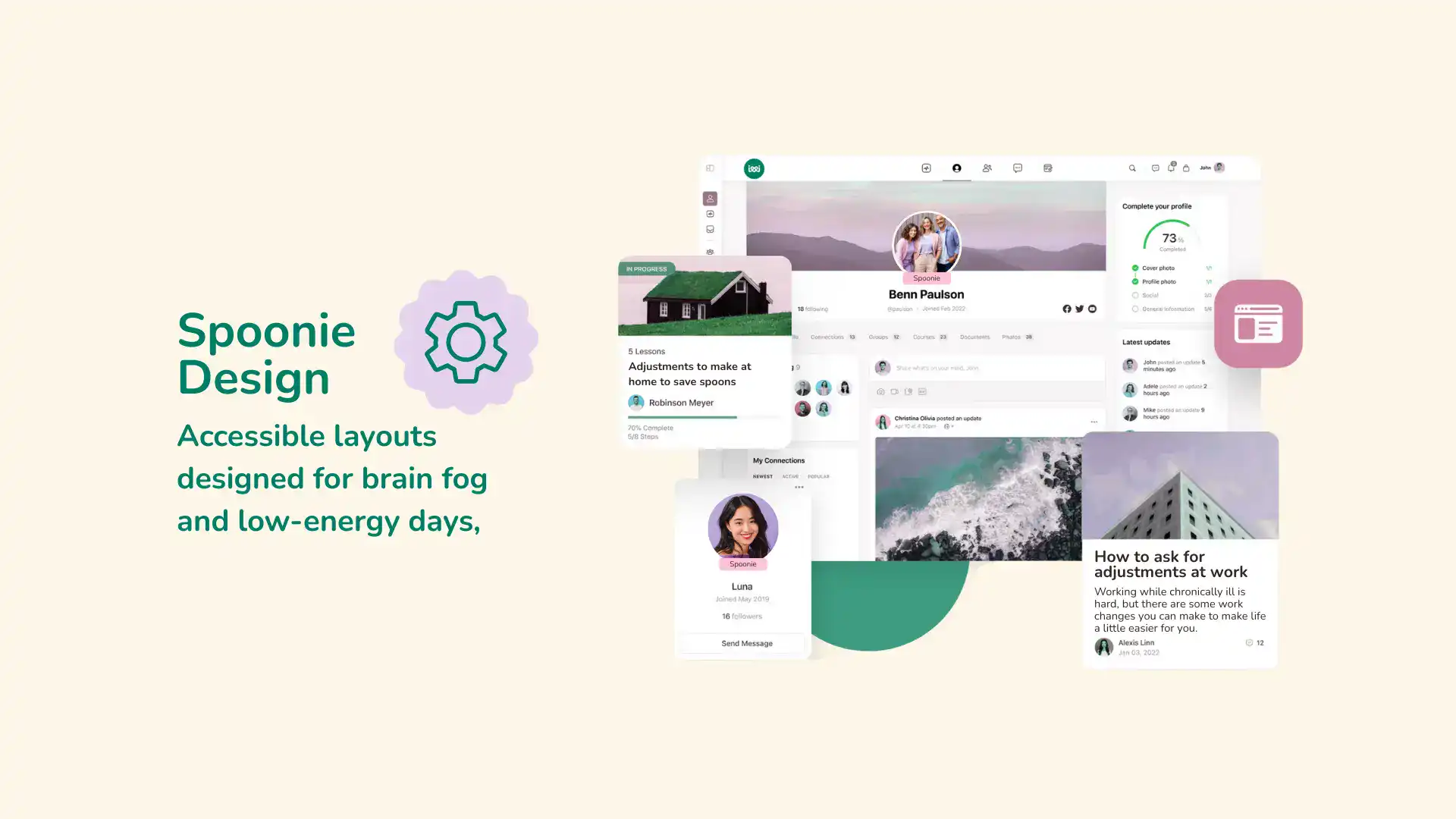
  • Spoonie-Centered Design:

    The interface is designed for fellow warriors. Gentle colors, clear navigation, and easy-to-read layouts make participation brain fog friendly and stress-free.

Alivio was started with firsthand knowledge of how isolating and overwhelming chronic illness can be. The goal was to create a space where everyone can show up exactly as they are, without pressure or judgment. The hope is for each member to feel supported, seen, and empowered here, on both the good days and the hard ones. Let’s grow this community together.
Amanda & Michelle (Founders)
Getting Started

Getting Started

  1. Click “Sign Up” to create an account. Complete a profile with a story, conditions, and a friendly photo.
  2. Head to the Welcome & Announcements forum to introduce yourself.
  3. Read the full Community Guidelines for all the details on how to make the most of Alivio.

Community Rules

  • Respectful communication is a must. Support others and use content warnings for sensitive topics.
  • Privacy is sacred. Never share someone else’s story without permission.
  • Share experiences, not medical advice. What works for one might not work for another.
  • No hate speech, discriminatory content, spam, or graphic medical content.
  • Product discussions should be honest and transparent.

    Read the full Community Guidelines here.

How the Forum Works

  • Alivio’s public forums are organized around the elements that connect everyone, regardless of diagnosis.
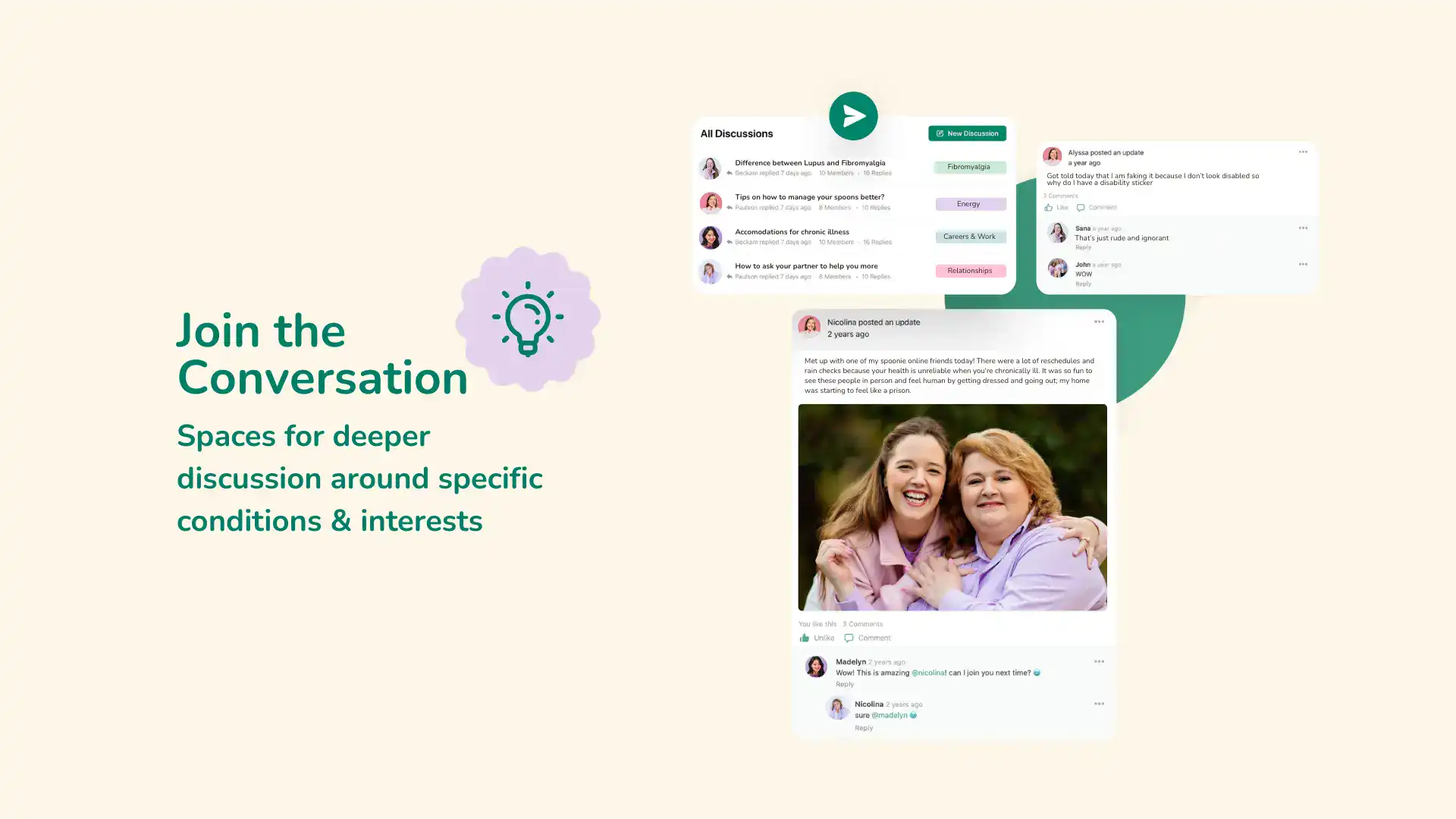
  • General Topics: Forums about relationships, career, mental health, brain fog, pain, fatigue, and more are open to all. Advice and support can flow freely between all chronic illness communities.
  • Condition Groups: Connect with others who share a specific diagnosis. These groups help find targeted support but remain public so everyone can benefit from shared tips and feedback.
  • Collaboration Over Segregation: Unlike private Facebook groups, Alivio’s open approach means valuable advice, hacks, and encouragement are not locked away. If something helpful is shared, every spoonie can see it.
  • Private Groups: Private groups or sub-groups are available for sensitive discussions or smaller circles, but openness and collaboration are the default.

Connecting With Others

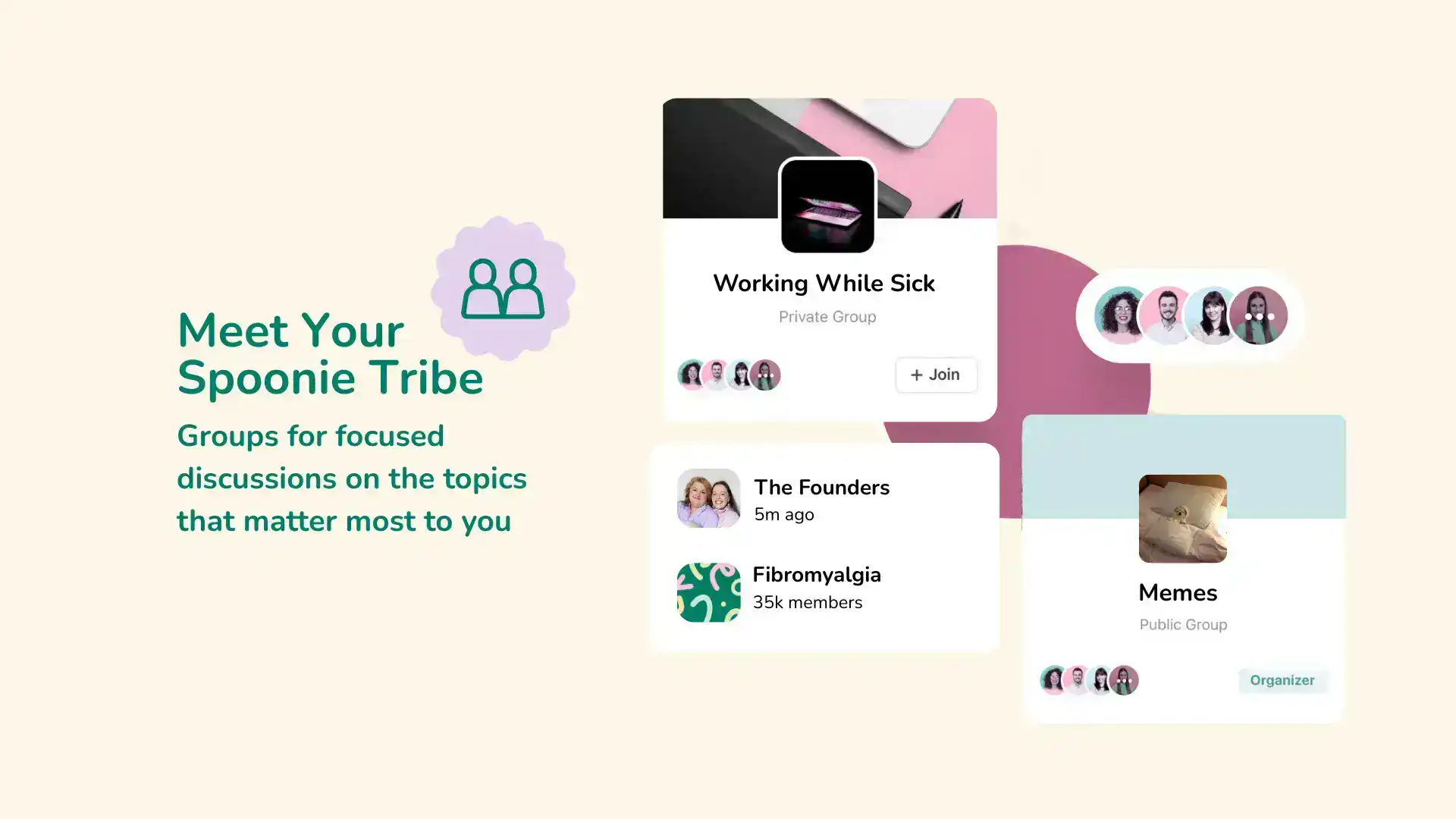
  • Groups & Circles 
    Join or create groups for diagnosis, interests, or local area. Groups help find people, share tips, and build lasting support networks.
  • Virtual Meetings 
    Attend or host spoonie-friendly virtual meetups, support sessions, or topic chats. Designed for all energy levels, these make it easy to connect face-to-face even on low-spoon days.
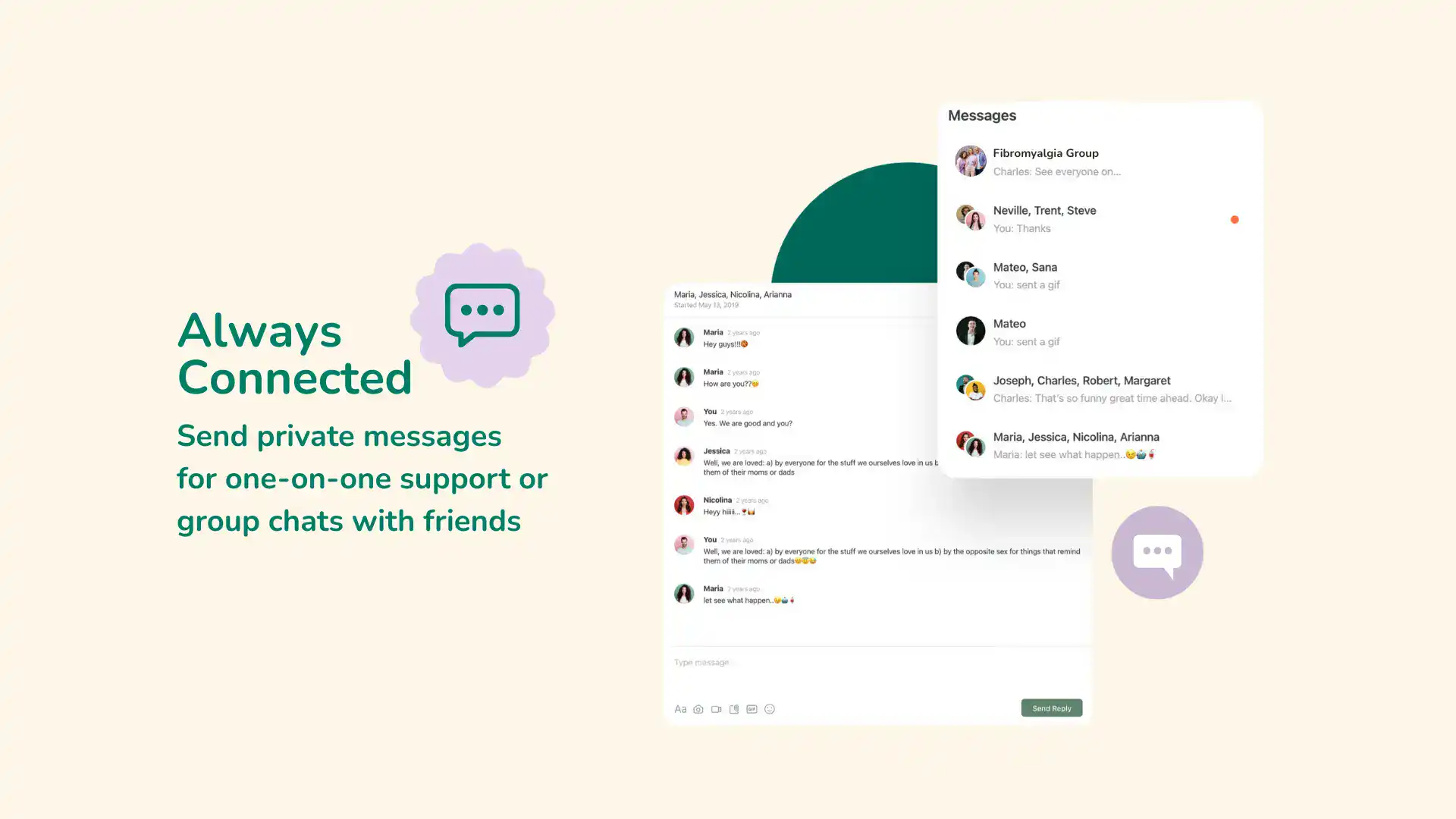
  • Private Messaging 
    Reach out one-on-one for personal support, to make a new friend, or to check in privately. Direct messages can be managed and preferred contact times set.
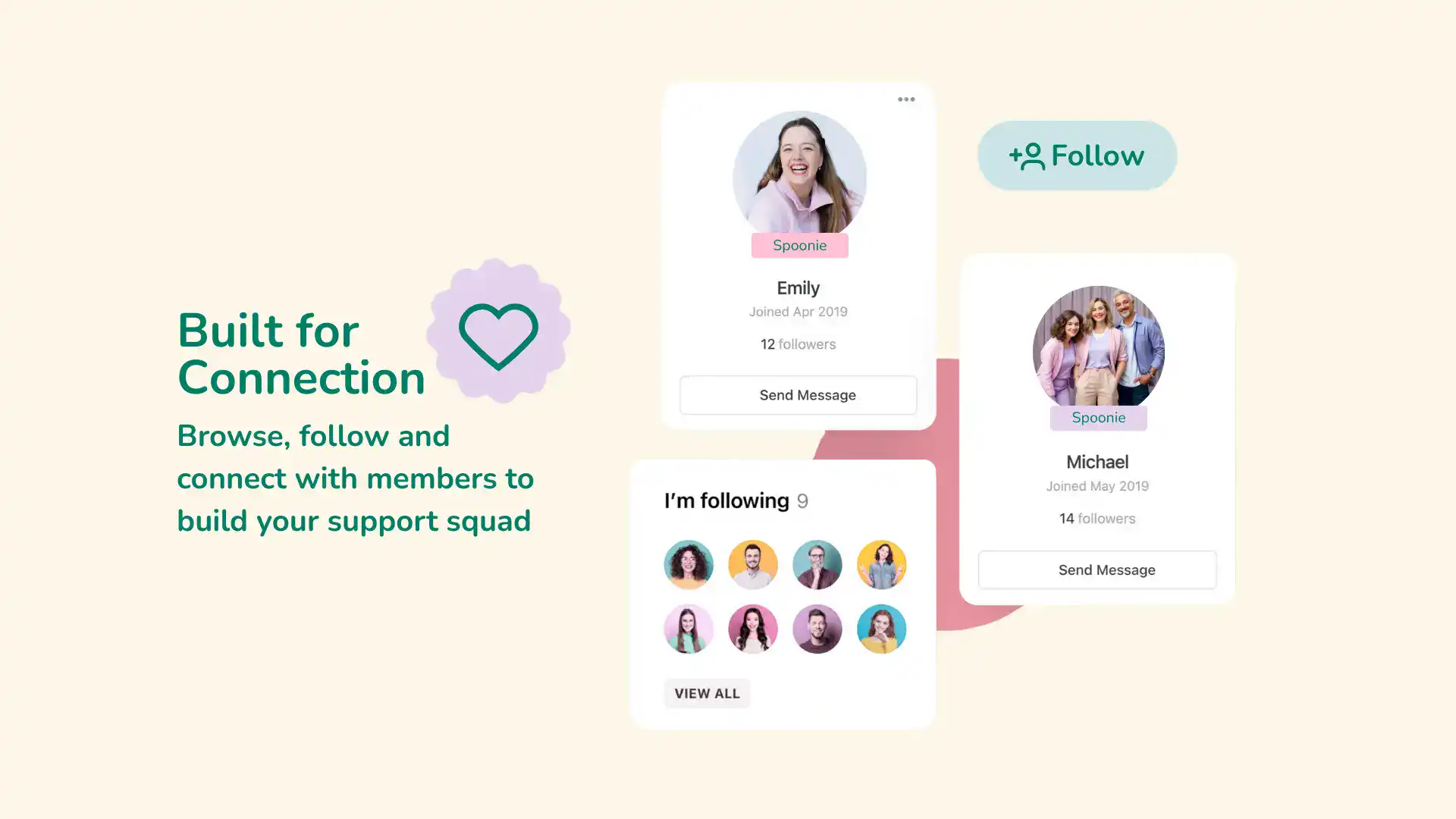
  • Following Members 
    Follow fellow warriors whose posts resonate. Receive updates when they share new tips, stories, or resources.
  • In-Person Events (Launching Soon) 
    Plans are underway to launch in-person meetups and events so local spoonies can connect. Watch this space for updates.

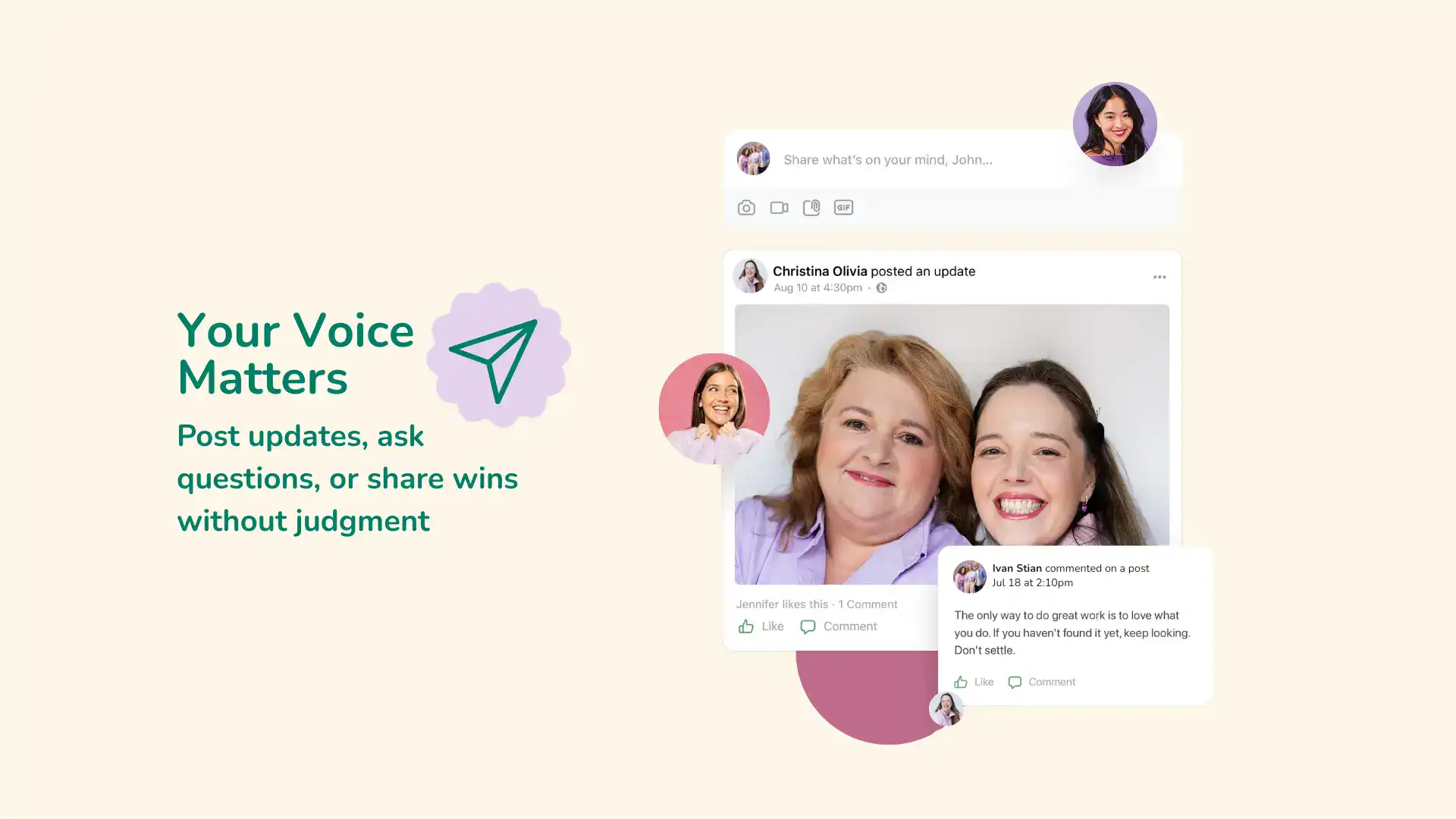
Sharing Your Story & Advice

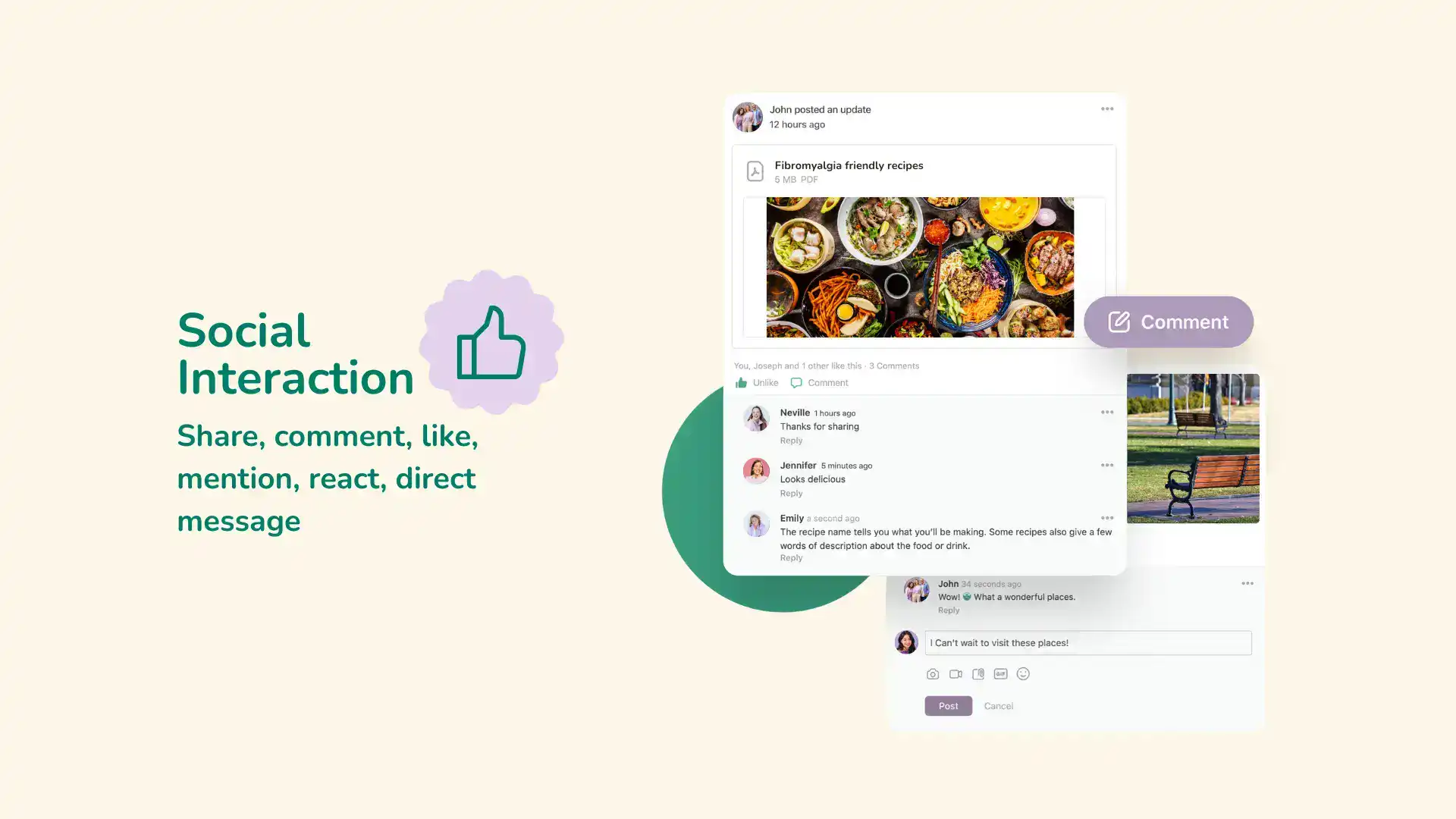
  • Public Forums 
    Post questions, share experiences, or offer advice in open forums like Brain Fog, Pain, Relationships, and more. Insights help everyone, regardless of diagnosis.
  • Condition Groups 
    Share targeted experiences and symptom hacks with others who share the same condition. These groups are public so tips and encouragement can benefit the whole community.
  • Milestones & Wins 
    Celebrate achievements, big or small, by posting in the forums, sharing in groups, or adding to a profile timeline. Every win counts and these stories can lift others up.
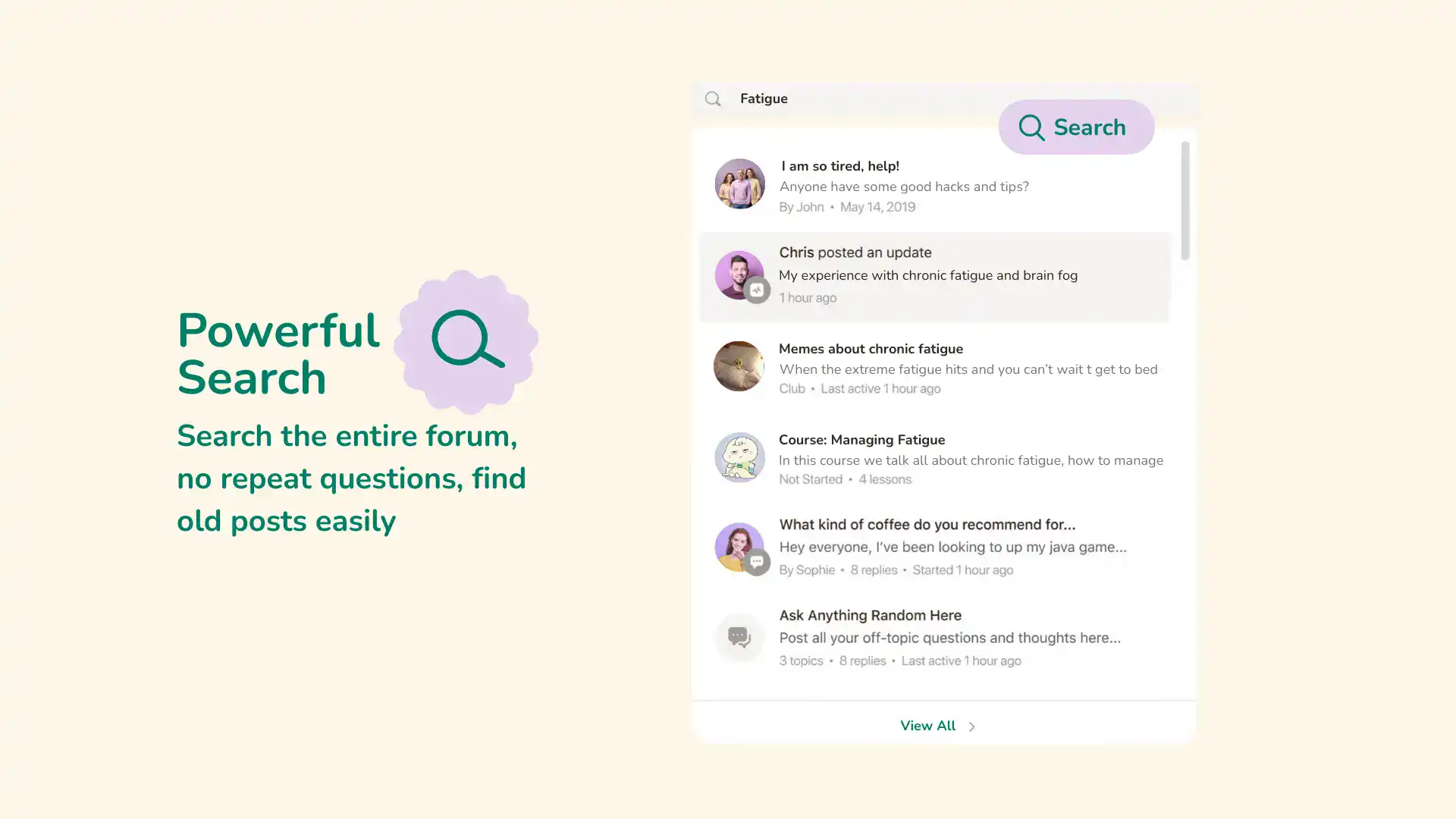
  • Resource Library 
    Discover and contribute articles, downloads, guides, and helpful links for living well with chronic illness. Search by topic or crowdsource answers from the community.
  • Product Recommendations 
    Review, recommend, or ask about products, gadgets, and comfort items. Honest feedback from real spoonies helps everyone make better choices.

Personalizing Your Experience

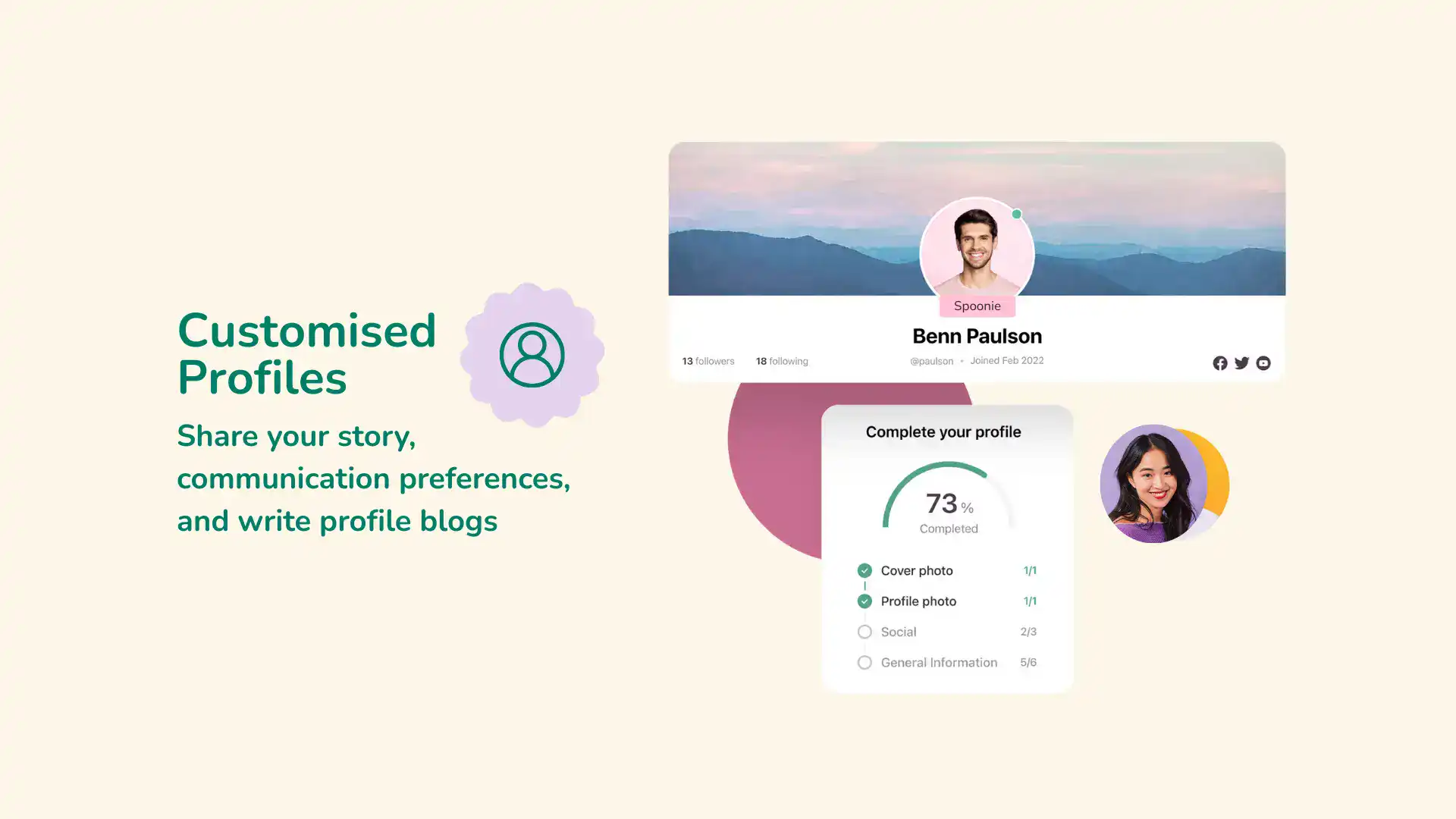
  • Profile Customization 
    Add conditions, a personal story, and update a photo and bio to reflect a journey and let others know what you’re about.
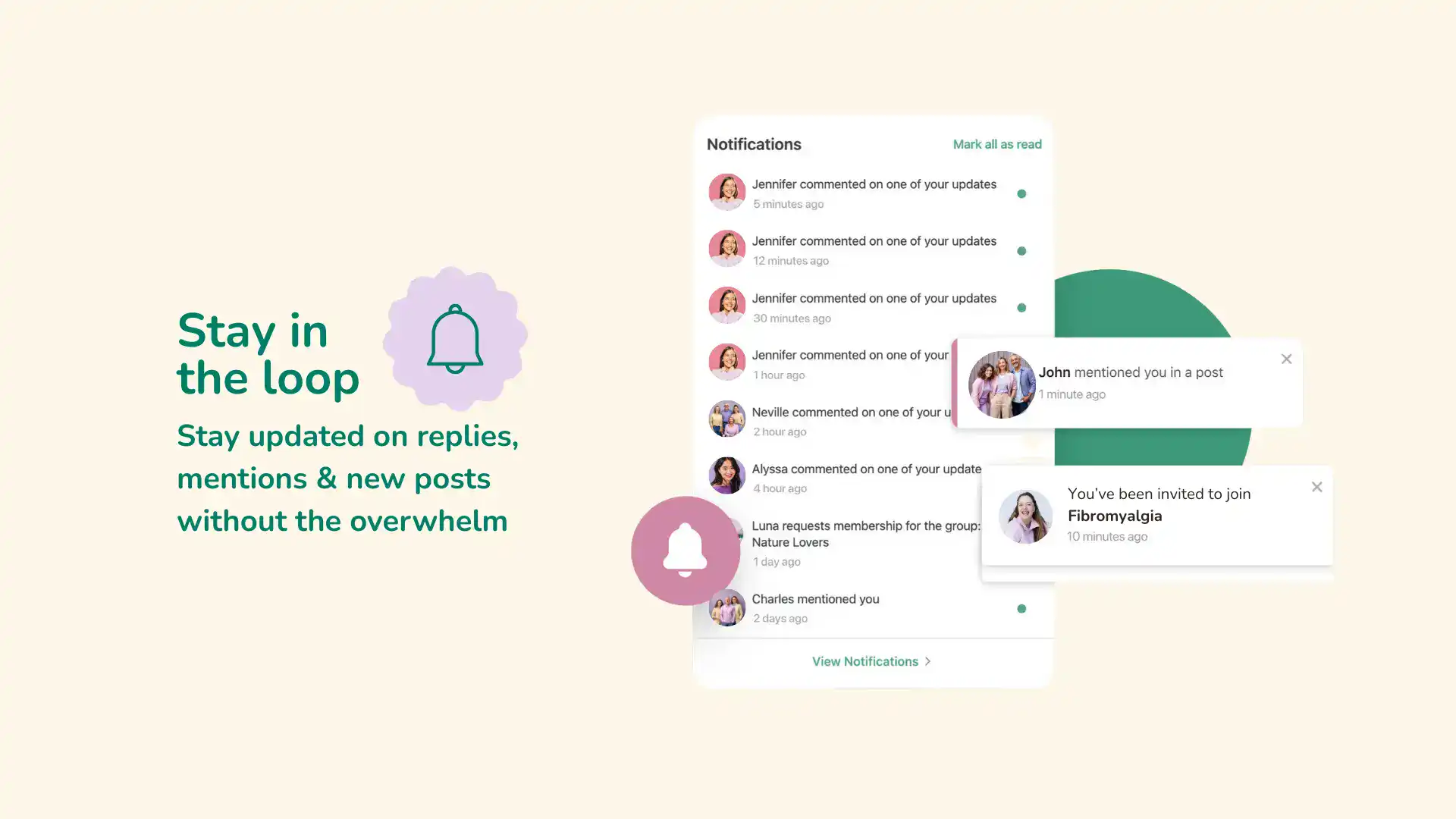
  • Notification Settings 
    Choose how and when to receive updates by email, in-app, or both. Stay in the loop in whatever way works best.
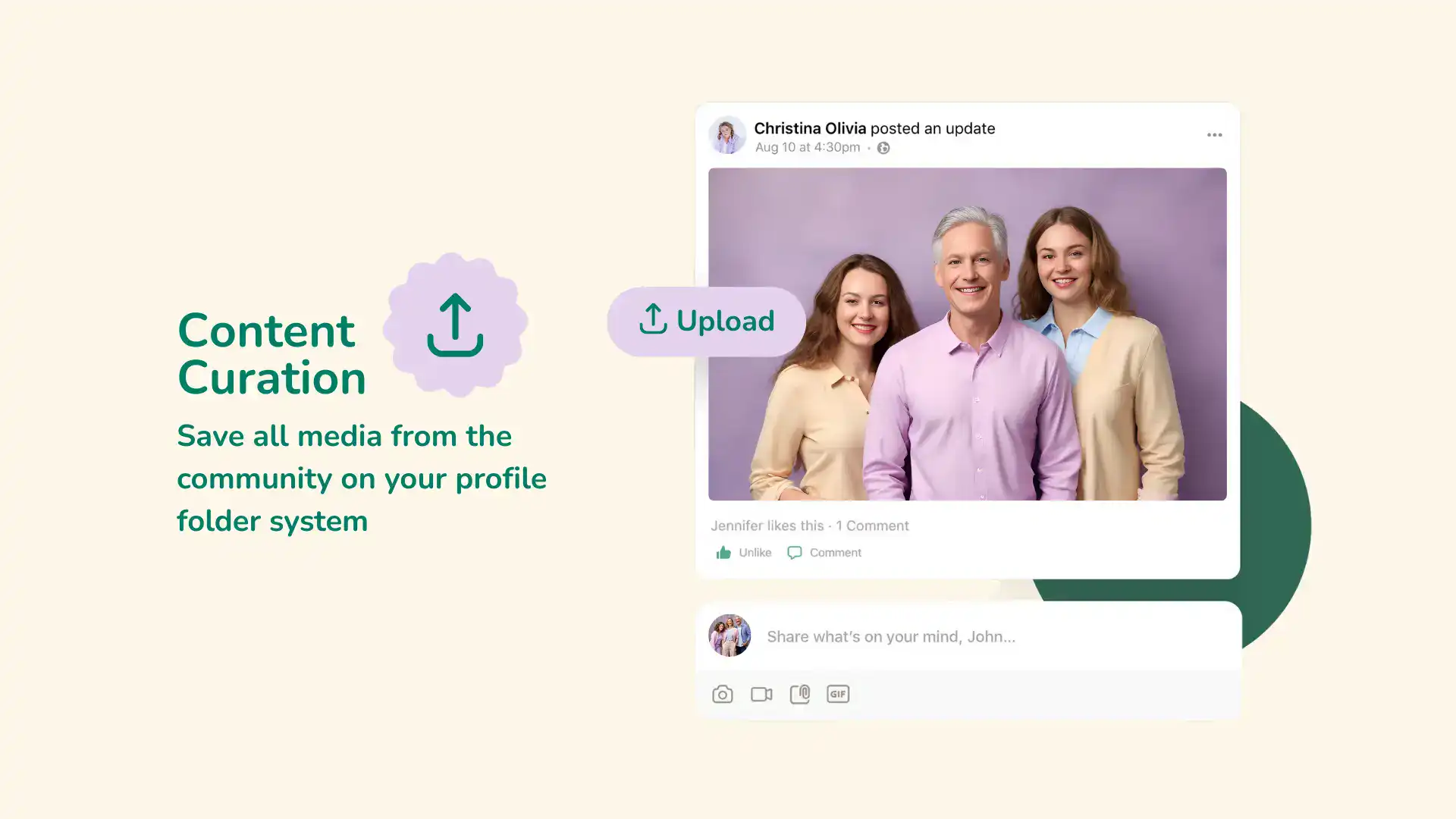
  • Bookmarks, Folders & Saving 
    Save posts, threads, or resources to revisit later. Organize saved content in folders for easy access, perfect for brain fog days or when building a personal resource library.
  • Privacy Options 
    Control profile visibility, post anonymously if preferred, or join private groups for more sensitive topics.
  • Spoonie-Centered Design 
    Gentle colors, clear navigation, and easy-to-read layouts make participation simple and stress-free. 
  • Accessibility Widget 
    Adjust text size, contrast, and other settings to fit individual needs. Alivio is built to be usable no matter energy, vision, or brain fog level.

Rewards & Gamification

  • Gamification & Leaderboards 
    Earn points for contributing, supporting others, and sharing resources. Top members on the leaderboard unlock special perks.
  • Loyalty Program Integration 
    The online store and forum are connected. Monthly loyalty point giveaways, competitions, and events reward top contributors with points, discounts, freebies, and VIP access. Activity in the forum can earn real rewards in the Alivio shop and vice versa.
  • Exclusive Opportunities 
    Top contributors may be invited to review new products, give feedback, access paid or employment opportunities, or join the brand team.

Help Shape Alivio

  • Help Desk 
    If stuck or have a question, message us in the chat box for step-by-step support.
  • Suggest a Feature 
    Share ideas for new features, improvements, or events. Alivio is built with community input, so feedback truly shapes the space. Send it to us either via the form on the contact us page or message us in the chat box
Anyone living with chronic illness, caregivers, and allies are all welcome.
Yes, joining and participating in the forum is completely free.
Join condition-specific groups or use the search bar to connect.
Yes, you can control your privacy and post anonymously if you prefer.
Get daily tips, peer support, resources, and a safe space to share your journey.

Participate in discussions, help others, and join events to earn points and unlock rewards.

In-person events are launching soon. Stay tuned for updates in the forum.

Yes, members can start new groups and suggest or host virtual and in-person events.

Click the report button on any post, message or person. Our moderators will review it promptly.

Send us a email via the form on the contact us page or send us a message via the chat box